It usually happens without warning. You hit the button, and instead of the smooth hum of your door rising, you hear a loud bang inside the garage. Then nothing. The door will not budge.
If you live in Celina, Prosper, or McKinney, your garage door is part of your daily routine. When a spring breaks, it throws everything off. From torsion spring replacement to snapped extension springs, most spring failures are predictable and often preventable. This guide covers the 7 most common reasons garage door springs break, what warning signs to watch for, and how to protect your home before a small issue becomes a costly repair.
What Is a Garage Door Spring and Why Does It Matter?
Your garage door weighs between 130 and 400 pounds. The motor does not lift that weight alone. The springs do the heavy lifting.
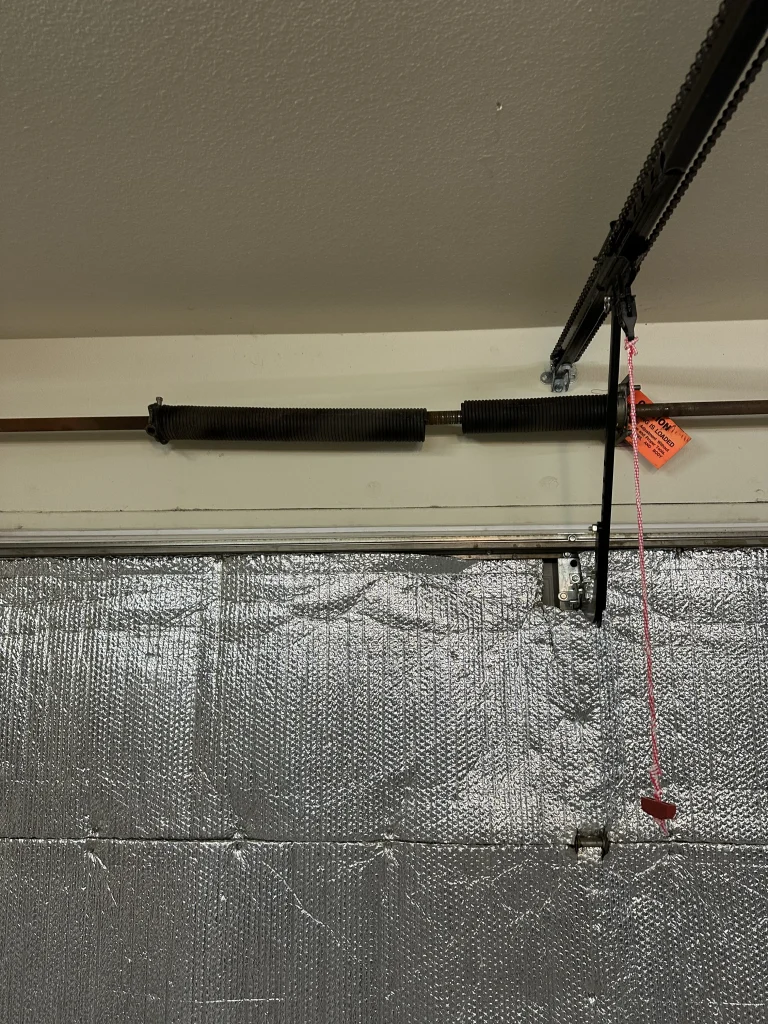
There are two main types. Torsion springs mount horizontally above the door and are most common in newer homes across Prosper and McKinney. Extension springs run along the side tracks and are more common in older homes throughout Allen and Celina.
When a spring breaks, the opener strains beyond its capacity, or the door stops working entirely. Knowing why springs fail keeps you ahead of the problem.
For steps to keep your springs in good shape longer, read How to Prevent a Garage Door Spring from Breaking.
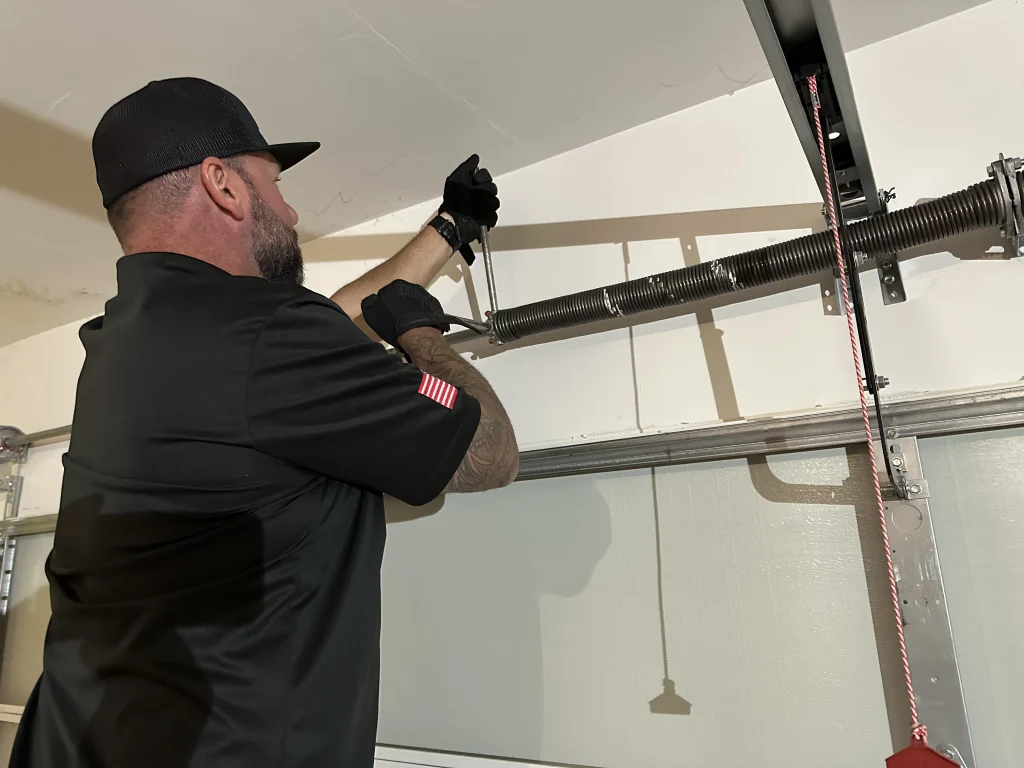
7 Reasons Your Garage Door Spring Broke
1. Normal Wear and Tear
This is the number one cause of spring failure. Every spring has a life cycle. Most standard springs are rated for about 10,000 cycles, and one cycle equals one open plus one close.
A household that uses the garage door four times a day logs roughly 1,460 cycles per year. That puts the spring at the end of its life in about 6 to 7 years. For busy families in Prosper and McKinney who use the garage as the main entry point, that timeline can be even shorter.
What to check: Find out how old your springs are. If it has been more than 7 years, replacement should be on the radar.
Expert tip: Ask about high-cycle springs rated for 25,000 to 50,000 cycles. The cost difference is modest, but the lifespan difference is significant.
Want to know exactly how much time is left on your springs? Check out How Long Before a Garage Door Spring Breaks?
2. Rust and Corrosion
North Texas humidity, seasonal rain, and temperature swings take a toll on metal. When rust forms on spring coils, two things happen. The coils create friction that accelerates wear, and the rust weakens the metal, making it more likely to snap under tension.
In areas like Melissa and Little Elm near bodies of water or lower-lying terrain, this problem moves faster.
What to check: Look for orange or reddish-brown discoloration on the coil surface.
How to avoid it: Apply a silicone-based or lithium-based lubricant every 3 to 6 months. Regular WD-40 is not recommended as it attracts dust and speeds up wear. Rust damage can progress quietly and catch homeowners off guard. Learn more in Can a Worn Garage Door Spring Break Suddenly?
3. Poor or No Maintenance
Most homeowners never think about the garage door until something breaks. When rollers wear out, cables fray, or tracks fall out of alignment, the spring compensates by taking on extra stress it was never designed to handle. Over time, that leads to early failure.
What to check monthly:
- Are cables frayed or off the drum?
- Are the rollers cracked or wobbly?
- Does the door stay in place when lifted manually to the halfway point with the opener disconnected?
- Are the spring coils evenly spaced, or is there a visible gap?
Expert tip: A professional tune-up once a year catches problems early.
4. Wrong Spring Size
Garage door springs are not one-size-fits-all. They are engineered based on the door’s weight, height, and track radius. In fast-growing communities like Celina and Little Elm, where new homes go up quickly, rushed installations sometimes result in the wrong spring being used.
An undersized spring overstretches and fails early. An oversized spring throws off the balance and burns out the opener motor.
Signs the wrong spring was installed:
- The door feels unusually heavy when lifted manually
- The opener sounds strained during operation
- The spring broke shortly after a recent installation
What to do: Always use a certified garage door professional for spring work, especially for larger doors common in upscale neighborhoods across McKinney and Prosper.
5. Extreme Temperature Changes
Texas weather swings hard. One week, it is 75 degrees, the next, a cold front drops temperatures into the 20s. This thermal cycling causes metal to expand and contract repeatedly, putting cumulative stress on springs.
Cold temperatures are especially damaging because cold metal becomes brittle. This is why so many springs snap on the first cold morning of the season across Celina, Allen, and Melissa.
What to check: Did the spring break occur after a sudden weather change? Are the springs exposed to outside air without insulation around the garage?
How to avoid it: Lubricate springs before and after winter. Consider an insulated garage door to regulate temperature and reduce stress on all metal hardware.
6. Improper Installation
A torsion spring under tension stores a large amount of mechanical energy. Installation mistakes, including winding the spring in the wrong direction, mismatched spring pairs, or improper cable drum alignment, create a spring that is under the wrong tension from day one.
This is a growing concern in booming areas like Celina and Prosper, where construction pace sometimes leads to shortcuts.
What to do: If a spring broke and the door is less than 3 years old, improper installation may be the cause. Have a certified technician inspect the full system before replacing the spring.
Safety warning: Never attempt to wind, adjust, or replace a torsion spring without professional training. A spring under tension can cause serious injury.
7. High-Cycle Frequency in Busy Households
As Celina, Prosper, and McKinney grow, more families are using the garage as the primary entry and exit point. Some households run 8 to 10 cycles daily, nearly double the average. At that rate, a standard spring wears out in 3 to 4 years instead of 6 to 7.
Signs of a high-cycle household:
- Two or more drivers using the garage as the main entry point
- A home-based business with frequent deliveries
- The garage connects directly to the living area and is used for every trip
Solution: Upgrade to high-cycle springs. Many homeowners in McKinney and Allen who have made this switch say it is one of the best maintenance upgrades they have made.
Warning Signs a Spring Is About to Break
Do not wait for the loud bang. Watch for these signals:
- A visible gap in the torsion spring coil
- The door feels extremely heavy when lifted manually
- The opener strains or immediately reverses
- Squeaking, grinding, or popping sounds during operation
- The door rises at an angle, or one side lifts faster than the other
- Cables hanging loosely on the side of the door
If any of these signs appear, stop using the door and call a professional right away. Continuing to operate a door with a failing spring can damage the opener, cables, and tracks, turning a simple spring job into a much larger repair.
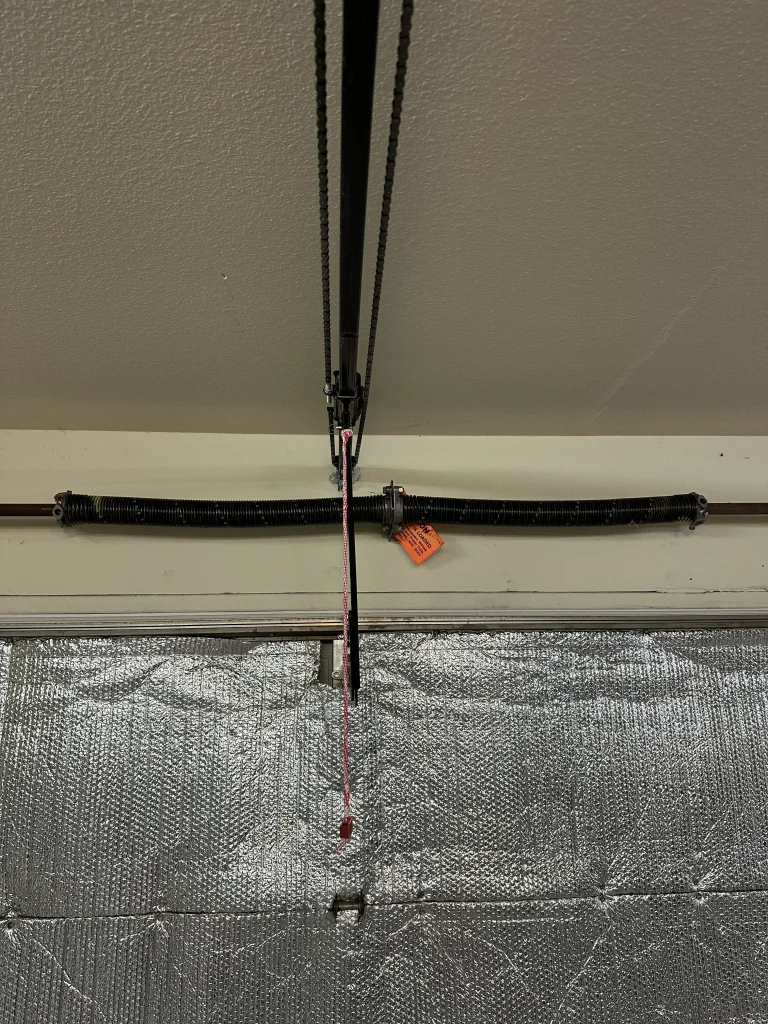
What to Do When a Spring Breaks
Stop using the door. Do not try to force it open manually. Disconnect the opener if it is still trying to operate.
Call a licensed garage door repair technician. For homeowners in Celina, Prosper, McKinney, Allen, Melissa, and Little Elm, qualified local technicians are typically available for same-day or next-day service. While the technician is there, ask about upgrading to high-cycle springs. It costs less to do it during an existing visit than scheduling a second appointment later.
Tips to Make Springs Last Longer
- Lubricate every 3 to 6 months with a silicone or lithium-based spray
- Schedule a professional tune-up annually
- Test door balance quarterly using the halfway-lift test
- Replace both springs at the same time, not just the one that broke
- Upgrade to high-cycle springs for high-traffic households
- Never ignore unusual sounds from the door system
Ready to Protect Your Garage Door Before It Becomes a Problem?
Alliance Overhead Door serves homeowners across Celina, Prosper, McKinney, Allen, Melissa, and Little Elm with dependable garage door service that North Texas residents trust. From routine spring inspections to emergency repairs, our team has the local expertise to keep your door running safely all year long. Do not wait for a broken spring to disrupt your day. Contact us today or give us a call to schedule a professional inspection or same-day service.
Frequently Asked Questions
Can a broken spring be repaired instead of replaced?
No. A broken spring has failed structurally and must be fully replaced. There is no safe repair for a snapped coil. Bob Vila covers this topic in detail for homeowners who want to understand the full replacement process.
Is it safe to use a garage door with a broken spring?
No. The door can fall unexpectedly, damage the opener, strip the cables, and bend the tracks. Stop using it immediately and call a professional.
Should both springs be replaced at the same time?
Yes. If one breaks, the other is near the end of its lifespan, too. Replacing both at once saves on labor and prevents a repeat service call within weeks.
Why did the spring break in cold weather?
Cold temperatures make metal brittle and less flexible. Rapid temperature drops, which are common across Collin County in winter, increase the risk of a spring snapping under normal operating tension.
What is the average cost to replace garage door springs?
The cost varies depending on the spring type, cycle rating, and the specific needs of the door. High-cycle upgrades cost moderately more upfront but last significantly longer, making them a smart investment for most households in North Texas.
Can the wrong spring size damage the opener?
Yes. An undersized spring forces the opener motor to work far beyond its designed capacity, which burns it out over time and can also damage the drive system inside the unit.
Is a torsion spring better than an extension spring?
For most homes, yes. Torsion springs last longer, operate more smoothly, and are safer when they fail. Extension springs are functional but wear faster and require a safety cable to prevent injury if they snap.
Can worn cables cause a spring to fail sooner?
Yes. Frayed or improperly seated cables create uneven tension across the spring during operation. That imbalance accelerates wear on the coils and shortens the spring's lifespan noticeably.
How do homeowners in Prosper and McKinney know if they have the right spring size?
The only reliable method is a professional assessment. A certified technician measures the door's weight, height, and track configuration and matches those specs to the correct spring. Oversized or custom doors, which are common in neighborhoods throughout McKinney and Prosper, require precise sizing that standard stock springs often do not match.