There is a sound that Prosper and McKinney homeowners never forget the first time they hear it. It comes from the garage. It sounds like a gunshot. And then the garage door just stops working. That sound is a garage door spring giving out. And while it feels like it came out of nowhere, the truth is that the spring had been sending warning signals for months. Most homeowners just did not know what to look for.
Garage door professionals working across Collin County have seen this play out in neighborhoods all over Celina, Prosper, McKinney, Allen, Melissa, and Little Elm. The homes are newer. The families are busy. And the garage door gets used six to ten times a day without a second thought, until the day it stops working. This guide covers why worn garage door springs break suddenly, what the warning signs look like, and what to do when a torsion spring replacement becomes unavoidable.
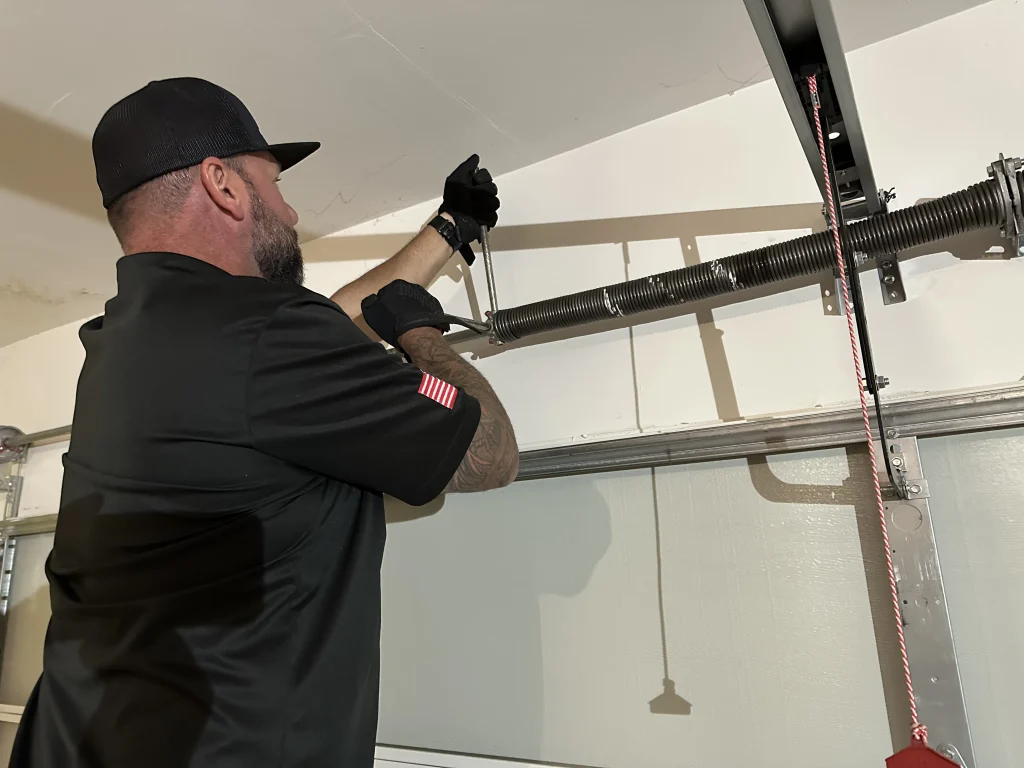
What Is a Garage Door Spring and Why Does It Matter?
Most people do not realize their garage door opener is not actually doing the heavy lifting. A standard garage door weighs anywhere from 150 to 400 pounds. The motor alone is not strong enough to handle that. The springs do the real work.
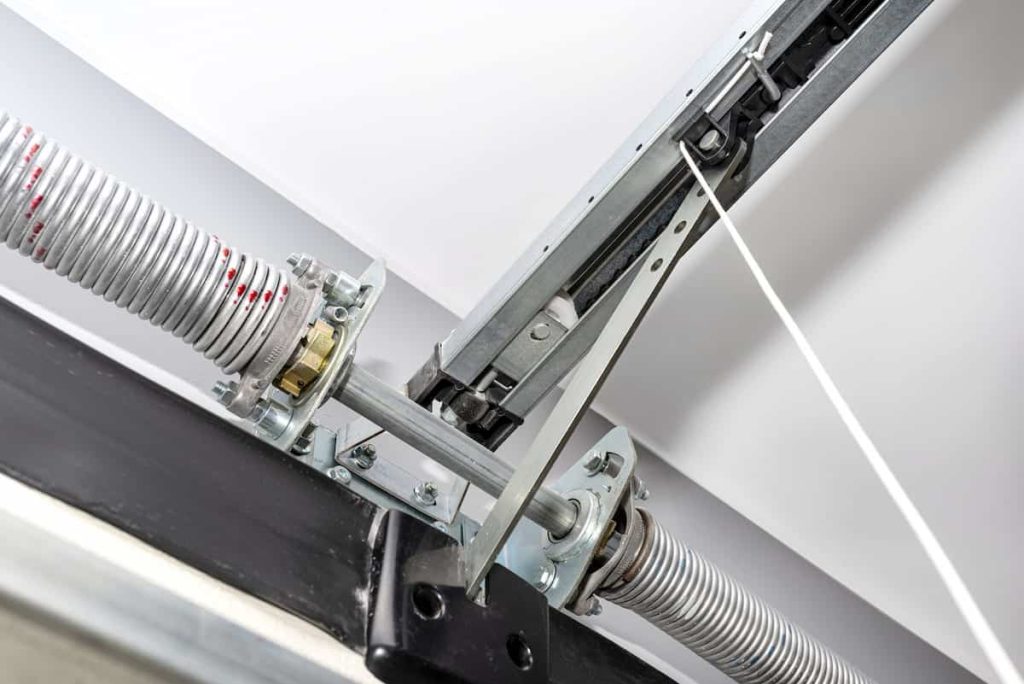
Springs store mechanical energy by winding tightly. When the door opens, that stored energy is released and counterbalances the door’s weight. When the door closes, the springs wind back up and store that energy again.
There are two main types used in residential homes:
Torsion Springs
They are mounted horizontally above the door opening. These are the most common types found in newer homes throughout Celina, Prosper, and McKinney.
Extension Springs
Run along the side tracks and stretch as the door moves. These are more common in older homes and are typically paired with safety cables.
Both types wear out over time. Both can snap suddenly. And when they do, the door becomes either dangerously heavy or completely immovable.
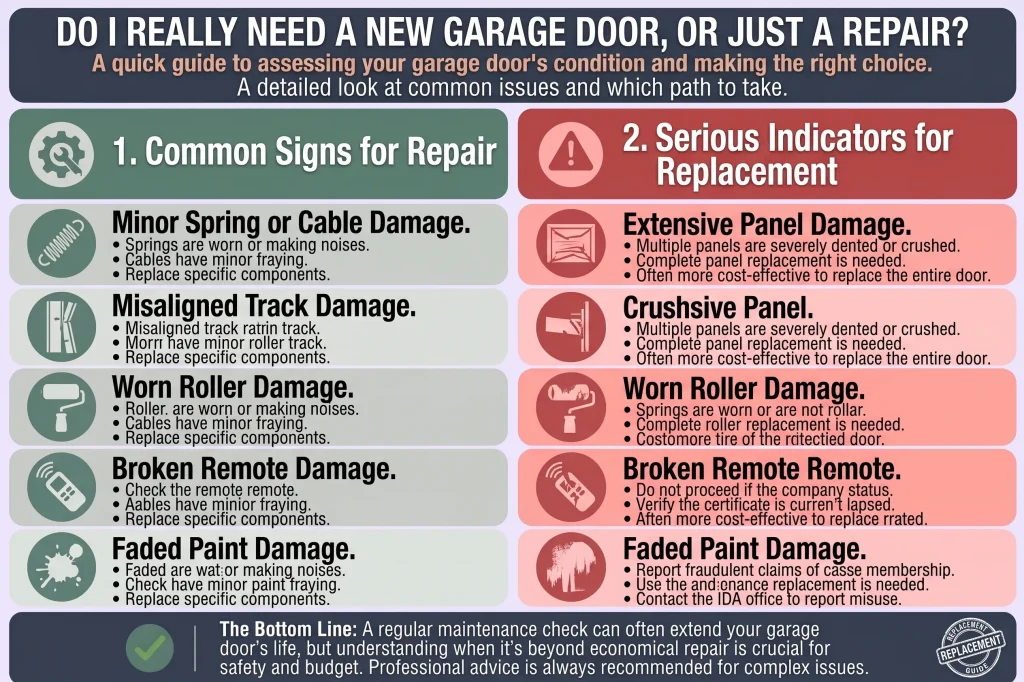
For homeowners who want to get ahead of the problem, the guide on How to Prevent a Garage Door Spring from Breaking is worth reading before a repair becomes necessary.
Can a Worn Spring Really Break Without Warning?
Yes, absolutely. But the word “suddenly” is a little misleading. The spring did not randomly decide to fail. It reached the end of its mechanical lifespan and gave out at the very next moment the door was used. Think of it like a rubber band stretched and released thousands of times. It does not slowly stop working. One day, it just snaps.
Standard garage door springs are rated for approximately 10,000 cycles. One cycle equals one open and one close. For a household using the garage four times a day, that is roughly 1,460 cycles per year, putting spring failure at around the seven-year mark. For busy families in Prosper and McKinney using the garage six to eight times daily, that timeline shortens to five years or less. Many homes built in Celina and surrounding Collin County communities between 2013 and 2019 are sitting right in that failure window today.
To understand the specific factors that lead to this kind of failure, the full breakdown is covered in What Causes a Garage Door Spring to Break? a helpful read for any Collin County homeowner who wants the complete picture.
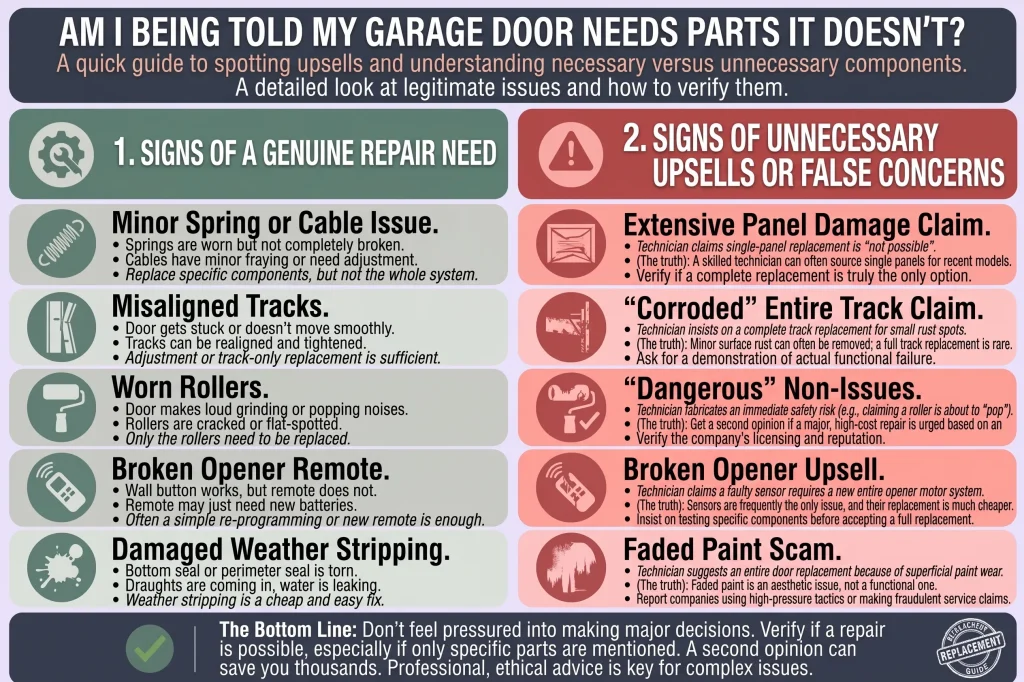
6 Warning Signs a Spring Is About to Break
Catching these signs early can prevent an emergency and a much more stressful situation.
1. The Door Feels Unusually Heavy
Disconnect the opener by pulling the red emergency release cord and try lifting the door manually to waist height. A properly balanced door should feel nearly weightless. If it feels heavy or drops back down when released, the springs have lost significant tension.
2. The Door Opens Unevenly
If one side rises faster than the other or the door looks crooked while moving, one spring may have already broken or lost tension. This also puts extra stress on the cables and opener motor.
3. Squeaking, Creaking, or Grinding Noises
Metal-on-metal friction increases as spring coils wear down. New noises that were not there before are a reliable early warning sign. This is especially common in Celina and Prosper homes that skip regular lubrication.
4. A Visible Gap in the Spring Coil
When a torsion spring snaps, it physically separates. Look at the spring mounted above the door. A visible gap of an inch or more means the spring is already broken, and the door should not be operated.
5. The Opener Strains or Hesitates
If the opener sounds like it is working harder than usual, or if the door moves more slowly than it used to, the opener is compensating for reduced spring tension. Continued use will eventually burn out the motor.
6. The Door Reverses Before Fully Closing
When spring tension is off, the opener’s auto-reverse sensors can misread the resistance as an obstruction. If the door reverses before touching the ground with no visible blockage, weakened springs are often the cause.
For homeowners wondering exactly how much time is left before a spring gives out, How Long Before a Garage Door Spring Breaks? dives deeper into the cycle counts, timelines, and what to expect based on daily usage.
What Happens When a Spring Snaps
When a garage door spring breaks, everything happens fast. There will be a loud bang that most homeowners describe as sounding like a gunshot inside the garage. It can happen in the middle of the night since the temperature drops after dark, putting added stress on already worn springs.
The door will stop moving almost immediately. Without the spring providing a counterbalance, the full weight of the door falls on the cables and opener. A 200 to 300-pound door becomes essentially immovable for most people.
Is it dangerous? Yes, it can be. Torsion springs store significant mechanical energy. When they snap, that energy releases instantly. This is why safety cables are installed through extension springs, to prevent the spring from becoming a projectile if it breaks. Older garages without safety cables on extension springs should have that corrected right away.
Why This Happens More Often in Collin County Than Homeowners Expect
Several factors make spring failure especially common across Celina, Prosper, McKinney, Allen, Melissa, and Little Elm.
- New Construction Boom: Collin County saw explosive growth throughout the 2010s. Thousands of homes built between 2012 and 2019 are now 6 to 13 years old, putting them directly in the spring failure window. Many of these homeowners have never given their garage door springs a second thought since moving in.
- Builder-Grade Springs: Most production homes in the area were built with standard 10,000-cycle springs. Homeowners are rarely told that high-cycle upgrades rated for 20,000 to 30,000 cycles even exist as an option at the time of replacement.
- North Texas Weather: The temperature swings in Collin County are brutal on metal components. Winters that dip into the teens followed by summers pushing past 100 degrees cause repeated expansion and contraction that accelerates wear far faster than in milder climates.
- High Daily Usage: In communities like Prosper, McKinney, and Celina, the garage is the primary entry point for most families. More daily cycles mean a faster path to spring failure.
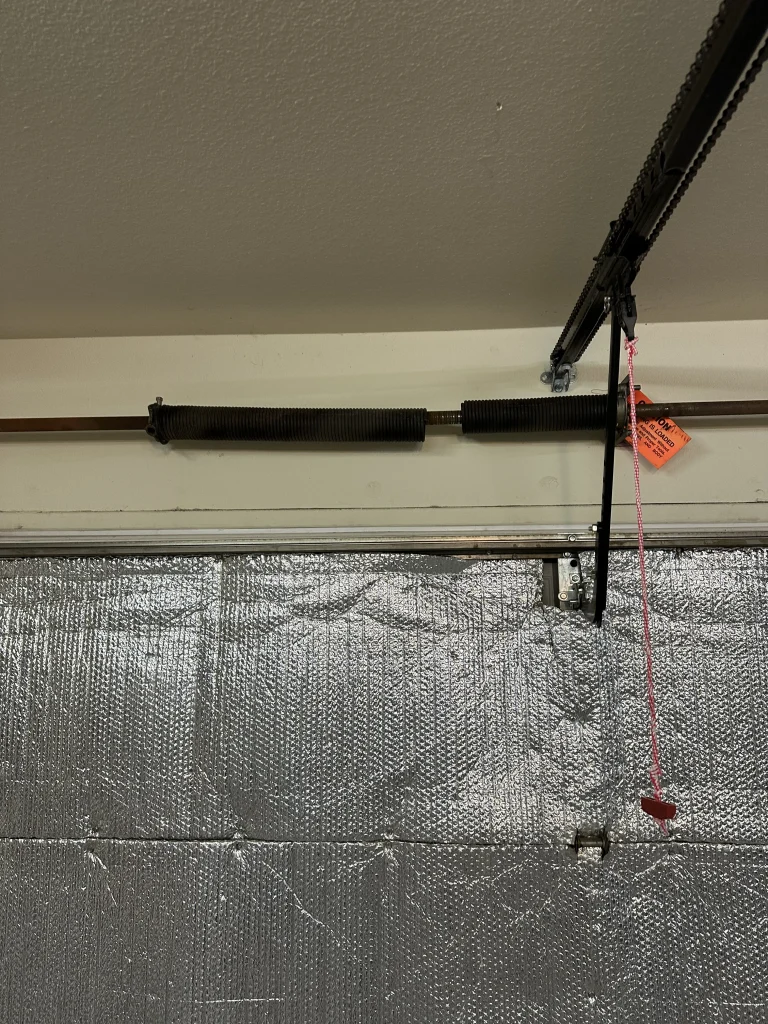
Tips to Prevent Sudden Spring Failure
Springs will eventually wear out, but the right habits can extend their life and prevent emergencies.
- Schedule an Annual Professional Inspection: A licensed technician can identify a spring nearing the end of its life and replace it on a planned basis rather than an emergency one. For homes in Celina, Prosper, and McKinney that are five or more years old, this is one of the most valuable maintenance habits available.
- Lubricate Springs Every Six Months: Apply a silicone-based or white lithium grease spray to the spring coils to reduce friction and slow wear. Do not use WD-40 on garage door springs. It is a solvent, not a lubricant, and will dry out the metal over time.
- Test the Door Balance Regularly: Disconnect the opener and lift the door manually to waist height. Let go. It should stay in place. If it drops or rises on its own, the springs are out of balance, and a technician should take a look.
- Ask About High-Cycle Spring Upgrades: When springs are replaced, ask about upgrading to 20,000 or 30,000-cycle options. For busy households in Allen, Melissa, and Little Elm where the garage is used heavily every day, the longer lifespan is well worth the modest additional cost.
- Do Not Ignore Small Problems: A slightly slow door, a faint squeak, or an opener that hesitates for a second are easy to dismiss. In most cases, those small signs are the early stages of a larger failure. Addressing them early is almost always less expensive than dealing with a full breakdown later.
What To Do When a Spring Breaks
- Stop Using the Door: Do not attempt to operate the door, manually or with the opener, until the spring is replaced. Forcing a door with a broken spring can damage the motor, bend the tracks, or cause the door to fall.
- Use the Emergency Release With Caution: If a vehicle is trapped inside, the red emergency cord can disengage the opener for manual operation. The door will be very heavy without a functioning spring. It should take at least two adults to lift and hold it safely.
- Do Not Attempt a DIY Replacement: Torsion springs are wound under extreme tension. Improper handling during removal or installation has caused serious injuries. This repair requires specialized tools and professional training. It is not a weekend project.
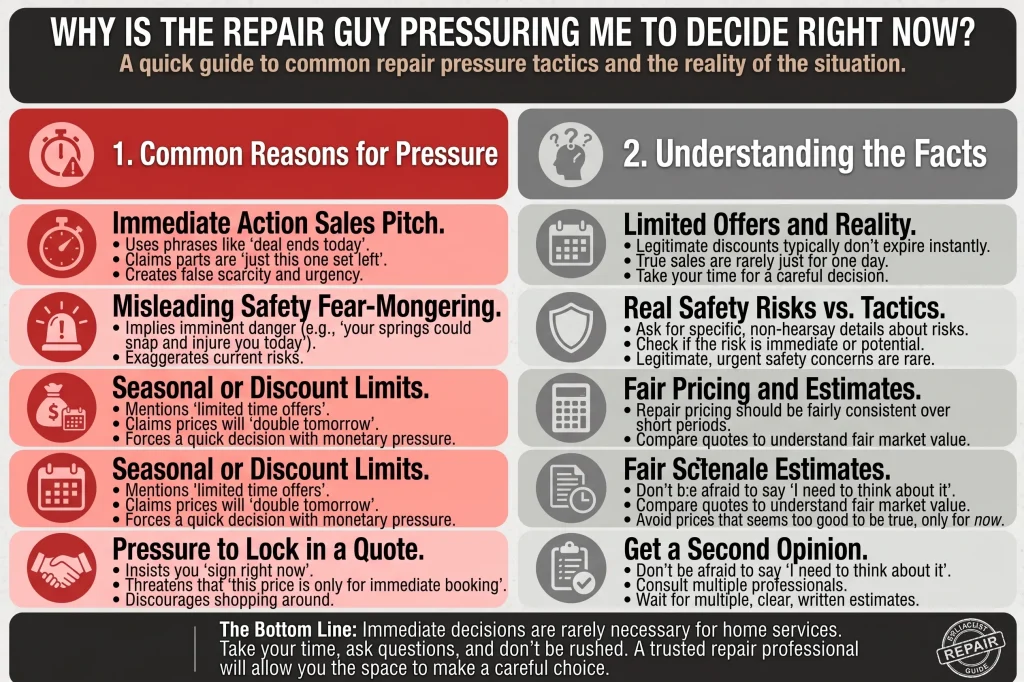
- Call a Local Professional: Most reputable garage door companies serving Celina, Prosper, and McKinney offer same-day emergency service. Spring replacement is one of the most common repairs in the industry, and a trained technician can typically complete the job within an hour or two. Replacing both springs at the same time is strongly recommended since if one has worn out, the other is not far behind.
Do Not Wait for the Bang
A worn garage door spring does not give much notice before it goes. But the signals are there for homeowners who know what to look for. For homes in Celina, Prosper, McKinney, Allen, Melissa, and Little Elm that are more than five years old, a professional inspection is one of the simplest and most practical maintenance steps available. It takes less than an hour and costs far less than an emergency repair.
When signs of wear show up, garage door repair should be handled by a licensed professional serving the Celina and Collin County area. Catching a spring problem early is always better than dealing with a sudden failure on the worst possible day.
Your Local Garage Door Experts Are Ready to Help
Alliance Overhead Door proudly serves homeowners across Celina, Prosper, McKinney, Allen, Melissa, and Little Elm with honest and reliable garage door service. From routine spring inspections to same-day emergency repairs, the team has the local expertise Collin County homeowners can count on. Contact us today or give us a call to schedule an inspection before a small problem turns into an emergency.
Frequently Asked Questions
Can a newer home have spring problems?
Yes. Cycle count matters more than age. A four-year-old home using the garage eight times a day can wear through springs faster than a ten-year-old home with light usage. As noted by Hunker, usage frequency plays a bigger role in spring wear than the actual age of the home.
Is it safe to use the door when a spring is broken?
No. It puts dangerous stress on the opener motor and cables, and the door can fall unexpectedly. Do not operate the door until the spring is professionally replaced.
Why do springs break in the middle of the night?
Temperature drops overnight, adding stress to already worn springs. A spring at the end of its life may hold through the day and snap when temperatures fall after midnight.
Should both springs be replaced at the same time?
Yes, always. Both springs go through the same number of cycles. If one fails, the other is equally close to failing. Replacing both at once saves on labor and prevents a second breakdown shortly after.
What does spring replacement cost in the Celina area?
Costs vary based on spring type, door size, and labor rates. Most homeowners in Collin County can expect a moderate service fee plus parts. Getting a quote from a licensed local company is the best starting point.
Can a broken spring be repaired instead of replaced?
No. A broken spring must be fully replaced. There is no safe way to weld, patch, or re-tension a spring that has already snapped.
What type of spring do most homes in Prosper and McKinney have?
Most newer homes use torsion springs mounted above the door. Older homes or lighter doors may use extension springs along the side tracks.
Are high-cycle springs worth the extra cost?
For most Collin County households, yes. High-cycle springs rated for 20,000 to 30,000 cycles last significantly longer and reduce the frequency of replacements, making them a smart long-term investment.
How can a homeowner tell if a spring is about to break?
The most reliable signs are a door that feels heavy when lifted manually, visible gaps or rust in the spring coil, new squeaking or grinding noises, uneven door movement, and an opener motor that sounds like it is struggling. Any of these signs warrants a professional inspection.