Is your garage door loud, slamming shut, or refusing to stay halfway open? These issues often indicate incorrect spring tension or opener settings. If you’re wondering how do you adjust a garage door, this guide will walk you through the process. We’ll cover the necessary tools, safety precautions, and step-by-step instructions to help you fix it safely and effectively.
With repair costs rising and safety always a concern, knowing how to make minor adjustments is a smart move. This guide provides expert tips, easy-to-follow instructions, and a comprehensive maintenance plan. From rebalancing the springs to correcting the opener settings, you will have everything you need to keep your garage door working smoothly.
Understanding Your Garage Door System
Understanding how garage doors work helps you make safe adjustments and prevent injuries. Adjusting a garage door starts with understanding spring types and why proper tension matters.
Types of Springs
The majority of garage doors use either of two types of spring systems.
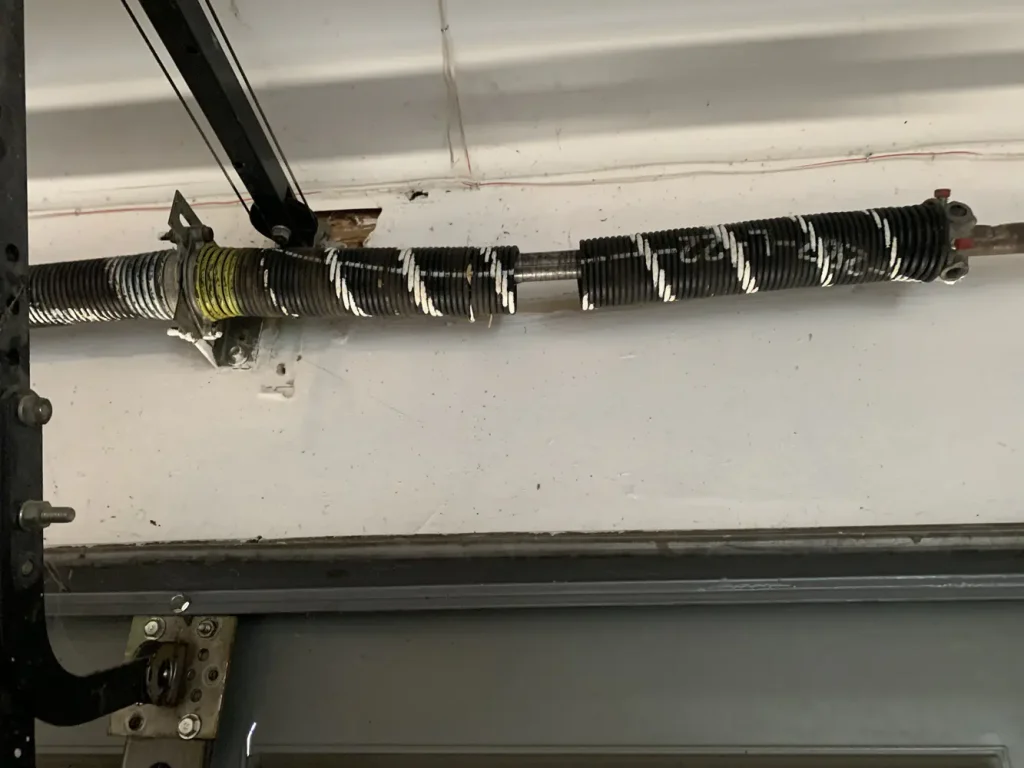
- Torsion Springs: These are located above the door and mounted on a steel shaft. They provide torque as they wind and unwind.
- Extension Springs: Installed along the door tracks on either side. They expand and compress to help counterbalance the weight of the door.
Why Tension Matters
Spring tension is what keeps the door balanced. When properly adjusted, the door should stay still when lifted halfway. Too much stress can cause it to fly open, while too little makes it slam shut.
Safety Hazards
Torsion springs hold a lot of tension and can be hazardous if not handled carefully. Never use screwdrivers or makeshift tools. Always use proper winding bars and clear your body of the spring’s rotational path.
When Do You Need to Adjust a Garage Door?
Recognizing the right time to adjust your garage door can help you avoid expensive repair bills. Look out for these performance issues, which suggest a tension problem or an opener calibration issue.
- The door won’t stay halfway open during a manual test.
- Your opener sounds strained or struggles to lift the door.
- Lifting manually feels too heavy or too light.
- You haven’t done any spring or opener maintenance in the last 6 to 12 months.
Essential Tools and Safety Tips to Adjust a Garage Door
Using the right tools is crucial for safely adjusting garage door tension. This section explains your needs and how to prepare your workspace for a secure process.
- Protective Gear: Safety glasses and gloves prevent injuries from metal parts or snapped cables.
- Ladder: Use a stable, non-slip ladder rated for your weight.
- Winding Bars: Always use two 18-inch steel winding bars for torsion springs, no substitutes.
- Wrench and Vice Grips: An adjustable wrench loosens set screws while vice grips hold the shaft in place.
- Lubricant: Use a non-silicone garage door spray for springs and moving parts.
- Flashlight: Improves visibility inside tracks or motor housing.
- Disconnect Opener: Always cut power and disengage the automatic opener before making any changes.
Adjusting Garage Door Torsion Springs
Adjusting torsion springs is a risky but manageable task with proper care. Follow these precise steps to safely increase or reduce tension.
Step 1: Preliminary Balance Test
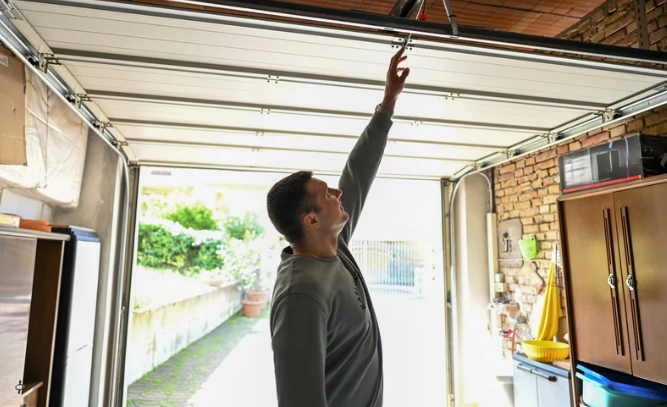
Disconnect the garage door opener and lift the door manually to the halfway point. If it rises or drops, the spring tension needs adjustment.
Step 2: Lock the Door and Insert the Bars
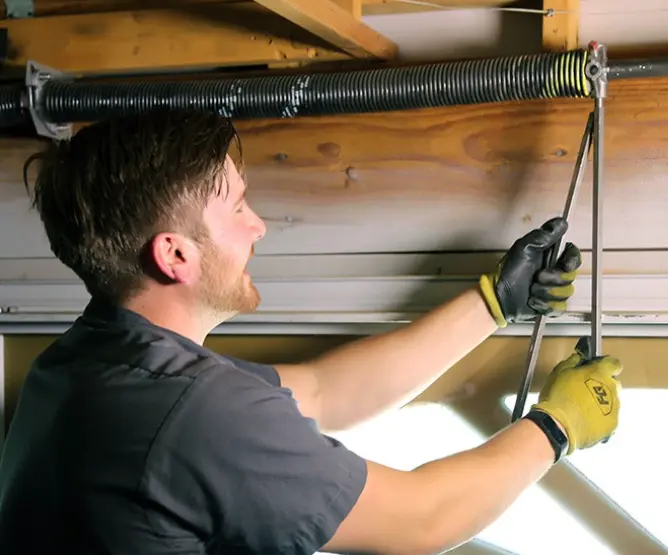
Clamp vice grips onto the track to keep the door steady. Carefully insert a winding bar into the torsion spring cone while holding it firmly for control.
Step 3: Loosen the Set Screws
Use an adjustable wrench to loosen the set screws slowly. Maintain steady pressure on the winding bar to prevent the spring from releasing tension too quickly.
Step 4: Adjust Tension Gradually
Turn the bar upward to add tension or downward to reduce it. Turn the spring in small quarter increments, and insert the second bar before taking out the first one.
Step 5: Rebalance and Retest
After each adjustment, remove the tools and test the door balance again. When raised halfway, the door should remain in place without moving. Repeat adjustments until the door is properly balanced.
Step 6: Finish and Lubricate
Once the door is balanced, tighten the set screws, remove all tools, and apply garage door lubricant to the spring coils for smoother, quieter operation.
Adjusting Garage Door Extension Springs
If your garage door uses extension springs, you can safely reset the tension using the S-hooks and safety cables to help rebalance the door and improve performance.
Step 1: Disconnect the Opener Safely
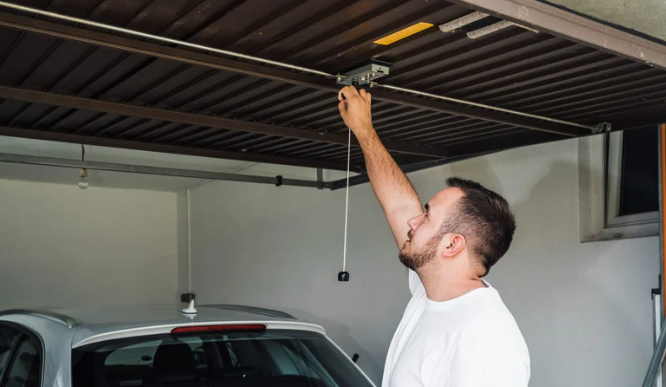
Pull the red emergency release cord to disconnect the garage door opener. This prevents it from engaging while you’re working on the garage door cable adjustment process.
Step 2: Test the Door’s Balance
Lift the garage door halfway and release. If the door moves up or falls, the extension spring tension is off and needs adjustment.
Step 3: Check the Safety Cables
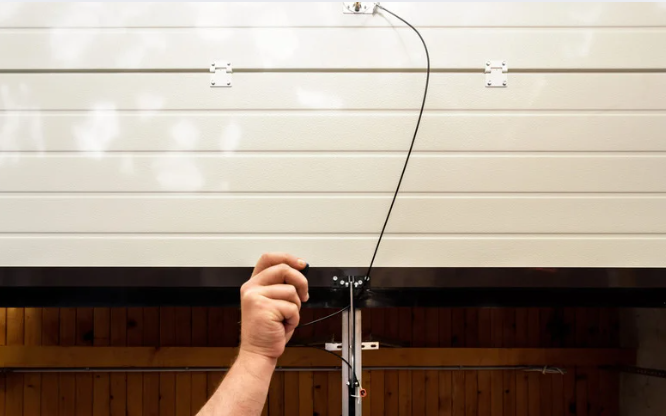
Make sure the safety cables are secure and in good shape. These cables prevent injury if the garage door spring snaps during spring adjustment.
Step 4: Move the S-Hook for Tension
Change the S-hook position on the horizontal bracket. Moving it closer increases spring tension, while moving it farther reduces pull strength and resistance.
Step 5: Reconnect the Opener and Test
Reattach the opener cord and run a full open-close cycle. Watch closely to confirm the smooth operation, proper travel, and safe garage door alignment.
How to Adjust and Calibrate a Garage Door Opener
Even after adjusting the springs, your opener may still require recalibration. This ensures smooth automation and proper safety limits.
1. Force Settings
Most garage door openers have force adjustment screws that control how hard the motor opens or closes the door. Adjust the screws slightly according to your manual’s instructions.
2. Travel Limits
If your garage door doesn’t fully open or close, adjust the travel limits using the dials or digital controls located on the opener’s motor unit.
3. Safety Sensors
Check that your garage door sensors are clean, aligned, and free of obstructions. Misaligned sensors often cause the door to stop or reverse unexpectedly.
4. Routine Tune-Ups
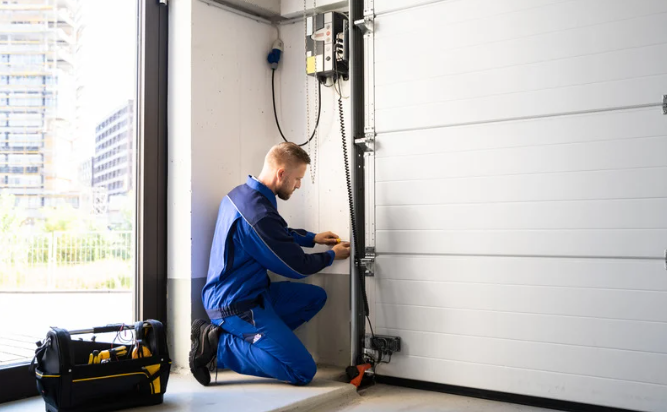
Basic tune-ups should include lubricating moving parts, checking the rollers for wear, and tightening any loose hardware on your garage door and opener system.
Garage Door Maintenance Tips After Adjustment
After adjusting your garage door, keeping it in good shape is key to avoiding future problems. These simple tasks help extend its life and improve safety.
1. Lubricate Moving Parts
Apply garage door lubricant to the hinges, rollers, and spring coils once a year. This keeps everything running smoothly and helps reduce wear and noise.
2. Perform a Balance Test
Do a garage door balance test every six months by lifting the door halfway. If it moves on its own, the spring tension needs adjusting again.
3. Clean the Safety Sensors
Wipe down the safety sensors gently with a clean cloth to remove dirt. Misaligned or dirty sensors can stop your garage door from closing properly.
4. Monitor Spring Cycle Limits
Most garage door springs last around 10,000 cycles. Replace them every 7 to 14 years to prevent sudden failure or dangerous spring breakage.
How to Troubleshoot Common Garage Door Adjustment Issues
Even after adjustment, some issues may still arise. This section helps identify what’s wrong and how to correct it.
| Issue | Possible Cause | Recommended Fix |
| The door is too heavy | Not enough tension | Add ¼ turn to springs. |
| Door slams open | Too much tension | Reduce spring turns slightly. |
| Loud noises | Dry hinges/rollers | Clean and lubricate all moving parts. |
| Frayed cables | Wear from tension | Replace immediately with a safety cable. |
| Broken spring | Age or overuse | Hire a professional to replace them. |
These garage door issues are usually caused by tension or worn parts. If problems continue after adjustment, it’s safest to contact a professional garage door repair service for help.
FAQs About Adjusting a Garage Door
How do I adjust my garage door alignment or tracks?
Use a level to check the position to fix a misaligned garage door track. Loosen the track brackets, adjust the track position until it’s aligned properly, then tighten the brackets securely to hold it in place. Proper garage door track adjustment helps prevent jamming, scraping, or uneven door movement.
How do I adjust the cable or S-hook on the extension springs?
To change the extension spring tension, move the S-hook to a different hole on the track bracket. Moving it closer adds more tension, while shifting it farther away decreases it. Always ensure safety cables are in place before adjusting the garage door extension spring tension or position.
How many turns should a torsion spring have for a 7-foot garage door?
For a standard 7-foot garage door, you’ll typically need around 7.5 full turns on each torsion spring. Always double-check your specific garage door manual or ask a technician for safe and proper torsion spring adjustment.
How do I adjust the travel limit screws on the opener?
Open your garage door opener cover to find the travel limit screws. Slowly turn the “up” or “down” screw to control how far the door opens or closes. Adjust in small increments to avoid motor strain or misalignment.
How can I increase spring tension if the door is too heavy to lift?
Rotate the torsion spring in small quarter turns using the correct winding bars to add tension to the garage door spring. For extension springs, move the S-hook closer to the track bracket. Always test the floor balance after each change to ensure appropriate lift.
Conclusion
Adjusting a garage door can save you time, money, and stress. A well-balanced door runs smoother, protects your opener, and keeps your home secure. Minor adjustments can make a big difference in daily use, whether spring tension or travel limits.
But not every garage door issue is safe to fix alone. Don’t take risks if your springs are broken or your cables are frayed. For expert service you can trust, turn to Alliance Overhead Door for garage door repair in Celina, TX. We’re here when the fix is beyond DIY.
At Alliance Overhead Door, we believe in doing things right the first time. Let’s get your door back on track if you’re looking for fast service, honest pricing, and long-lasting results. Schedule your service now and give your garage the reliable care it needs.
End Note
If you’re still wondering how to adjust a garage door or need more than a quick fix, Alliance Overhead Door has the team and tools to help. We provide a full range of garage door services, from installing openers and adjusting springs to handling complete door replacements.
We handle everything from garage door repairs and panel fixes to torsion spring replacements and garage door replacements. Need help with openers? We provide garage door opener services and install high-performance units, such as the LiftMaster 98022. We’re available around the clock for emergency garage door repairs when you need fast and dependable service.
To get to know us better, visit our About Us page, view our completed work, and read our customer reviews. You can also find helpful tips in our blog posts, explore our service areas to see if we work near your area, or follow us on Instagram and Yelp for more updates. Ready to schedule? Book a service or Contact Us today for quick, professional help. We’re prepared to get your door working like new.
Alliance Overhead Door
2710 Wildwood Ln, Celina, TX 75009, United States
+19723704710