Most homeowners think of a garage door as a single large surface. Still, the structure consists of multiple interconnected sections that carry weight, resist wind, and remain aligned with moving hardware. Understanding how panels support smooth travel helps explain why minor damage can change how the door sounds, seals, and moves.
Knowing how garage door panels function also helps homeowners determine when a professional repair is sufficient and when replacement is the safer option. Panel design affects insulation, curb appeal, and how evenly the door distributes load across hinges and rollers. Clear signs and practical timing guidance reduce the risk of unexpected breakdowns and help ensure access and security remain reliable.
How Garage Door Panels Keep Door Movement Safe and Smooth
Garage door sections act as the backbone of door travel. Each panel connects through hinges, reinforcing struts, and hardware points that distribute force from lifting systems. When the opener or manual lift begins a cycle, the bottom section starts moving first, then the remaining sections follow as rollers guide travel along tracks. Panel alignment influences how tightly the door seals at the floor and against jambs, and panel stiffness affects how well the door resists bending under wind pressure.
Key ways panels contribute to system performance include:
- Keeping the door weight balanced across hinges and roller brackets
- Supporting consistent track travel without binding
- Maintaining a tight seal that improves comfort and limits drafts
- Protecting internal reinforcement and insulation layers
- Reducing vibration and noise when hardware is aligned correctly
- Preserving the door’s appearance and structural stability during daily use
Panel condition matters because slight bends and cracks can alter hinge geometry, causing misalignment and uneven travel. A door that flexes can also transfer additional stress to rollers, tracks, and lift components, increasing wear.
When homeowners want clarity on familiar causes of garage door panel damage, visit our blog, “What Typically Causes Garage Door Panel Damage Over Time?”
When Panel Damage Starts Affecting Security, Sealing, and Safety
Panel damage often begins as a cosmetic change, yet function can decline quickly when the door stops sealing correctly or begins rubbing during travel. Dents may limit reinforcement strength, and cracks near hinge lines can spread with repeated cycles. A bowed section can pull rollers out of ideal alignment, increasing track friction and potentially causing louder operation.
Problems homeowners often notice include:
- Gaps along the bottom seal or side weatherstripping
- Daylight showing through panel seams
- Sagging sections that look out of square
- New rattling or grinding during opening and closing
- A binding that causes the opener to pause or reverse
- Visible cracking near hinges or fasteners
In many situations, a professional can confirm whether garage door panel repair can restore safe operation or whether replacement is the safer option. Homeowners often ask about replacing garage door panels when damage affects the seal, reinforcement, or hinge stability.
For early warning signs and inspection clues, check our article, “How Can You Spot Early Signs of Garage Door Panel Problems?”
Repair vs Replacement Decisions for Panels With Visible Damage
The right service choice depends on where the damage is located, how the section supports the hardware, and whether the door remains aligned. Minor dents away from hinge points may remain stable, while cracking near hinges or roller brackets can raise risk because hardware points carry the load on every cycle. A professional review also checks whether reinforcement struts remain secure and whether the door stays balanced.
Situations that often support repair include:
- Shallow dents that do not distort the hinge or roller mounting
- Minor cosmetic marks that do not affect sealing
- Small surface issues that do not spread near panel seams
Situations that more often support replacement include:
- Cracks near hinges, handles, or roller brackets
- Warping that changes the track travel alignment
- Rust-through or rot that weakens structural integrity
- Separation at seams that affects stiffness and sealing
Homeowners may compare options and ask about garage door panel replacement costs, but final recommendations depend on the door model, section availability, insulation design, and the condition of surrounding hardware. A professional can determine whether replacement panels are available for the existing door or whether a broader plan is more practical.
For cases where replacement may not be necessary, visit our blog, “Is Full Garage Door Panel Replacement Always Necessary?”
How Technicians Evaluate Panel Condition and Related Hardware Wear
Panel condition rarely exists in isolation. A professional inspection checks how damage impacts hinge alignment, roller travel, track spacing, and door balance. Panel damage can also indicate impact that shifted tracks or loosened fasteners.
Alignment and travel review
Technicians watch the door cycle to identify binding points and out-of-square travel. Even slight warping can change how the rollers seat in the track.
Hardware and reinforcement inspection
Hinges, roller brackets, struts, and fasteners are checked for looseness or elongation. A damaged section can transfer stress into adjacent hardware.
Opener compatibility and force behavior
A door that drags can strain the opener or cause a reversal. Professionals assess garage door opener settings and safety response after confirming door travel integrity. Inspection guidance from InterNACHI outlines common wear patterns and safety concerns that support early professional evaluation.
Balance and lift system check
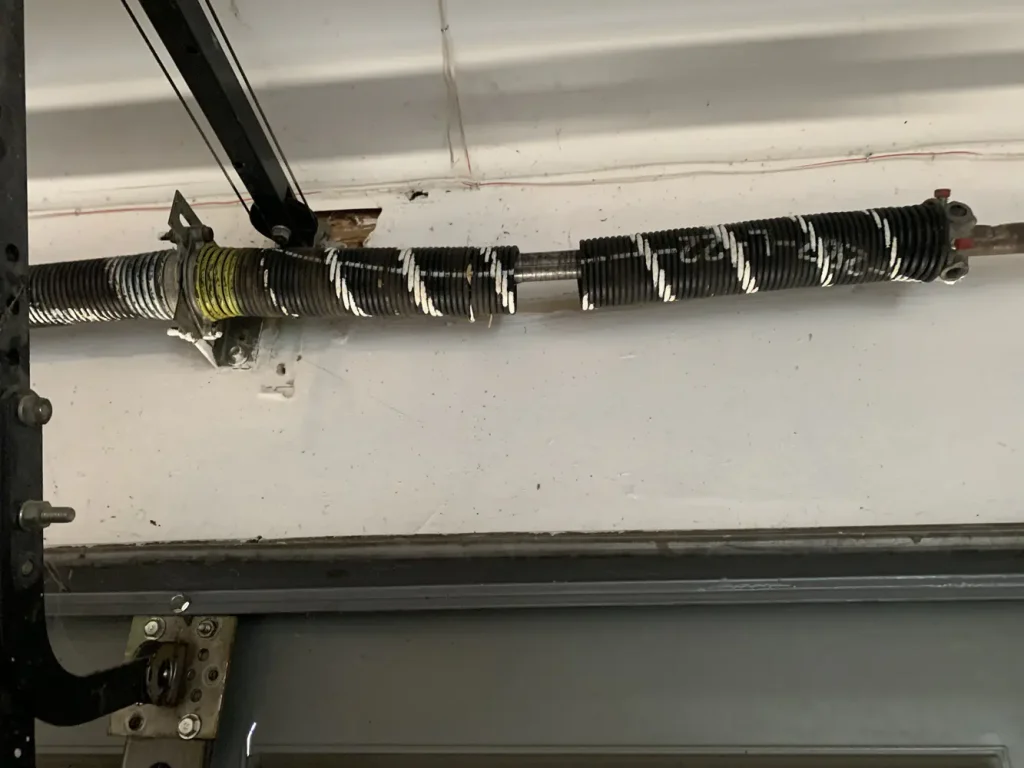
Panel damage can coincide with imbalance, especially when a door has been forced or impacted. Spring and cable conditions are reviewed, and torsion spring replacement may be recommended if balance support is compromised.
A complete evaluation supports safer decisions and helps prevent repeated strain across moving parts.

When Broader Replacement Makes Sense Beyond a Single Panel
Sometimes a single damaged section is only part of a larger reliability problem. Multiple aging sections, repeated hardware issues, or a design mismatch between older panels and newer parts can make a broader solution more practical. A professional can assess whether panel availability matches the existing door model and whether long-term stability is realistic after a section swap.
Matching panels and long-term availability
If the door model is older, matching finishes and profiles can be limited. In those cases, replacing the entire garage door may yield a cleaner result and avoid mismatched sections.
Safety and reliability goals
A door with multiple weakened sections can be harder to keep aligned. Professionals consider household safety, security, and the likelihood of repeat service.
Residential use demands
Many homeowners prioritize reliable sealing, quiet operation, and dependable performance for residential garage doors used multiple times per day.
For households needing rapid help after a sudden impact or failure, service teams may also handle emergency garage door repairs when the door cannot close or the opening is unsecured.
Prevention and Service Planning to Reduce Repeat Panel Problems
Panel damage risk can be reduced through routine professional inspection and timely correction of alignment issues. Early service often prevents minor misalignments from becoming repeated rubbing that scars sections and stresses seams.
Helpful planning steps include:
- Scheduling inspections when new noises or rubbing begin
- Confirming tracks remain secure and properly spaced
- Replacing worn rollers or hinges before travel becomes uneven
- Addressing weather seal gaps that allow moisture exposure
- Reviewing door balance and opener force behavior during service
Homeowners often search for the best garage door repair provider when they want a precise diagnosis, reliable parts matching, and safe results without guesswork. Professional service also helps confirm whether cosmetic damage is stable or whether structural weakness is developing.
Panel Condition Clues and What They Often Mean
A side-by-side chart can help homeowners connect visible panel clues with likely risks and the typical professional response. The goal is clarity, not guesswork, since final recommendations depend on door model, damage location, and hardware condition.
| Panel Clue | What It Often Means | Risk Level | Typical Professional Recommendation |
| Dent away from hinges or seams | Mostly cosmetic change | Lower | Evaluate stability and confirm alignment |
| Crack near the hinge line | Structural stress at a load point | Higher | Inspect hardware points and consider section replacement |
| Bowed or warped section | Alignment drift and uneven travel | Medium to higher | Check track spacing, reinforcement, and door balance |
| Rust-through or rot | Loss of strength and fastener hold | Higher | Assess section integrity and plan replacement options |
| Seam separation | Weakening stiffness and sealing | Medium | Determine repair viability based on spread and location |
Precise observation supports better questions during a service visit. A professional can confirm whether repair is appropriate or whether replacement improves safety and reliability.
Make Confident Panel Decisions With Clear, Practical Guidance
Panel problems affect more than appearance. Section alignment influences travel, sealing, and the strain placed on hinges, rollers, and lift components. Understanding how panels function helps homeowners recognize when damage remains cosmetic and when structural weakness can affect safety or door control. Professional evaluation provides the clearest path because recommendations depend on the door model, reinforcement design, section availability, and the condition of surrounding hardware.
Alliance Overhead Door supports homeowners in Celina, TX, with expert inspections and service focused on safety, reliable access, and preventive care. Our team checks panel integrity, hardware wear, and lift balance to recommend the most practical next step based on the door’s condition.
Contact us today or give us a call to talk through garage door panel concerns. An expert can recommend the safest service path based on how the door operates and where the damage is located.
Frequently Asked Questions
Can you just replace the panels on a garage door?
Yes, individual garage door panels can be replaced if the rest of the door system is in good condition. Panel replacement is usually possible when damage is isolated, and the manufacturer still supports the door model. This Old House notes that replacing the panel is a practical option when the remaining door sections, tracks, and hardware are structurally sound.
How do you know when your garage door needs to be replaced?
Replacement may be necessary when multiple panels are damaged, the door is structurally compromised, or repairs become frequent. Poor insulation, outdated design, and declining performance are also common indicators.
Can I just replace four panels on my garage door and not the rails?
Yes, rails typically do not need replacement if they are properly aligned and undamaged. Panel replacement focuses on the door sections rather than the track system.
Can I buy just the panels for my garage door?
Yes, replacement panels are available for many garage door models. Availability depends on the manufacturer, door style, and whether the model is still in production.
How do you repair a rusted garage door panel?
Minor surface rust can sometimes be treated, but advanced rust usually weakens the panel structure. Severe rust damage often requires panel replacement to maintain door strength and appearance.
Are garage door panels universal?
No, garage door panels are not universal. Panels vary by manufacturer, door model, size, and design, which means exact matching is required for proper fit and function.
Can garage door panels be replaced with windows?
Yes, solid panels can often be replaced with windowed panels if the door design supports it. Compatibility depends on door construction, balance requirements, and manufacturer specifications.
Can you just replace a garage door without replacing the frame?
Yes, the door itself can often be replaced without changing the frame if the frame remains square and undamaged. Frame condition is always assessed before installation.
Can you replace just one panel of a garage door?
Yes, replacing a single panel is possible when damage is limited and matching panels are available. This option works best when the rest of the door remains structurally sound.