Picture this. It is a regular Tuesday morning in Celina, Texas. The coffee is ready, the kids are buckled in and the only thing standing between the driveway and the school drop-off line is the garage door. The button gets pressed, the motor hums and… nothing. The door barely lifts an inch before slamming back down. Something has snapped, literally.
This is one of the most common garage door emergencies homeowners deal with and it almost always comes down to a broken spring. When this happens, a torsion spring replacement is usually the fix needed to get things back on track. But how often do garage door springs actually break? Is this something that happens once every few decades, or should Celina homeowners be checking their springs more regularly?
The short answer is that most standard garage door springs are designed to last around 10,000 cycles. That translates to roughly 7 to 12 years for the average household, depending on how frequently the door gets used. But several factors, including the intense North Texas heat, can shorten that lifespan significantly.
This guide breaks down everything a homeowner should know about garage door spring failure, from understanding how springs work to spotting the warning signs before things go wrong.
What Does a Garage Door Spring Actually Do?
Most people never think about the springs on their garage door until one breaks. But these springs are doing the heavy lifting, quite literally, every single time that door goes up or comes back down.
A standard two-car garage door can weigh anywhere from 150 to 250 pounds or more, especially if it is insulated. The springs act as a counterbalance system, storing and releasing tension so the garage door opener does not have to bear the full weight of the door on its own. Without functional springs, the opener motor would burn out fast and lifting the door manually would feel like deadlifting a loaded barbell.
There are two main types of garage door springs that homeowners in Celina will encounter:
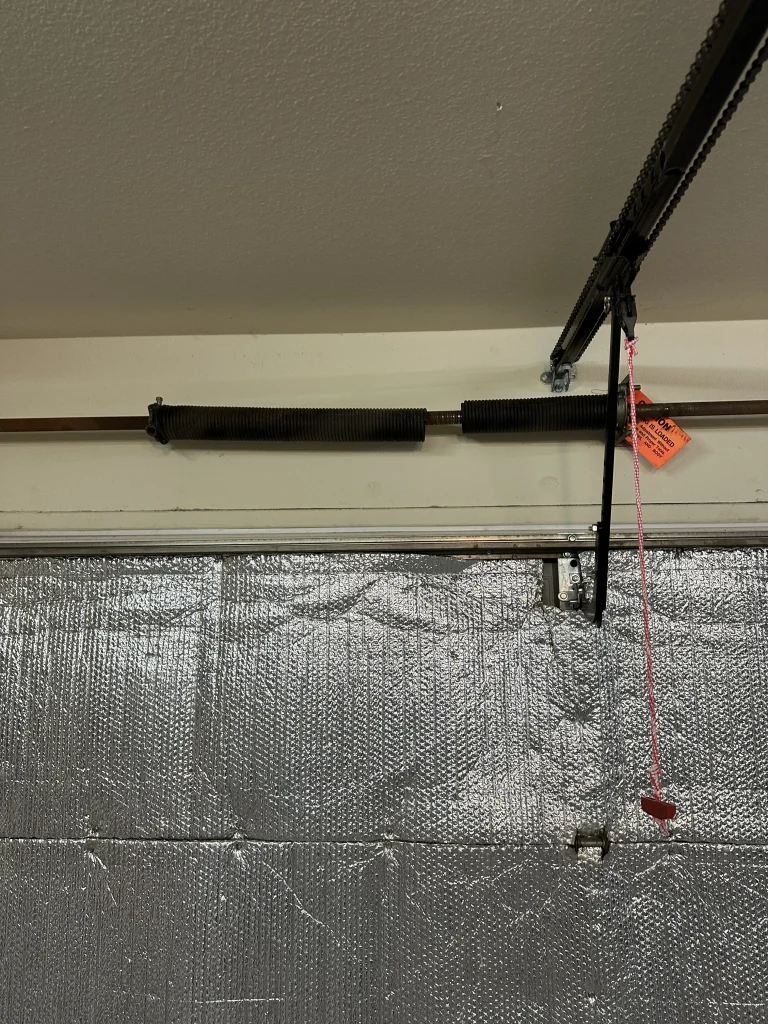
- Torsion Springs: These are mounted on a metal shaft directly above the garage door opening. They twist and unwind to raise and lower the door. Torsion springs are the more common type found in newer homes across Celina and the surrounding North Texas area.
- Extension Springs: These run along the horizontal tracks on both sides of the door. They stretch and contract to generate the lifting force. Extension springs are typically found in older homes or single-car garage setups.
Both types serve the same purpose, but they wear differently and understanding which type is installed in a home can help predict when a replacement might be needed.
For a deeper look at the specific reasons springs fail, check out the full guide on “What Causes Garage Door Springs to Break?”
How Frequently Do Garage Door Springs Snap?
Most garage door springs are rated for approximately 10,000 cycles. One cycle equals one full open and one full close of the garage door. That is it. Every time the door goes up and comes back down, that counts as one cycle closer to the end of the spring’s life.
For the average Celina household that opens and closes the garage door about 3 to 5 times per day, a standard set of springs will typically last between 7 and 12 years. Homes with heavier usage, such as families with multiple drivers, teenagers, or a home office that requires frequent trips in and out, may see springs wear out in as few as 4 to 6 years.
High-cycle springs are also available and are rated for 25,000 to 50,000 cycles. These are a worthwhile investment for homeowners who want to avoid dealing with a broken spring every few years, especially in a fast-growing community like Celina where many homes are still relatively new.
It is also worth noting that springs do not usually give a dramatic warning before they fail. In many cases, a spring will simply snap without much notice, often when the door is in the closed position. That loud bang that sounds like a gunshot coming from the garage? That is almost always the sound of spring breaking.
Wondering what to do if it happens? Read the guide on “Can You Open a Garage Door With Broken Springs?” to learn the safe next steps.
7 Factors That Cause Garage Door Springs to Break Sooner
Not all springs make it to the 10,000-cycle mark. Several conditions can speed up the wear and tear process and many of them are especially relevant for homeowners living in Celina, TX.
1. Normal Wear and Tear From Daily Use
Every cycle puts stress on the metal coils. Over thousands of repetitions, the steel gradually weakens through a process called metal fatigue. This is completely normal and unavoidable. Even a perfectly maintained spring will eventually reach the end of its rated cycle life. It is simply a matter of when, not if.
2. Extreme Texas Heat and Temperature Swings
Celina sits right in the heart of North Texas, where summer temperatures regularly exceed 100 degrees Fahrenheit. During winter, the occasional freeze can drop temperatures below 20 degrees in a matter of hours. This kind of rapid temperature fluctuation causes the metal in garage door springs to expand and contract repeatedly, which accelerates the weakening of the coils over time.
Garages in this region also tend to trap heat, meaning the springs may be exposed to even higher temperatures than the outdoor air. This thermal stress is one of the biggest reasons springs in North Texas tend to wear out faster than in milder climates.
3. Lack of Regular Maintenance
Springs that never get lubricated or inspected tend to fail sooner. Lubrication reduces friction between the coils, helping the spring move smoothly and preventing unnecessary wear. Without it, the coils grind against each other with every cycle, creating heat and accelerating fatigue.
Many homeowners in Celina’s newer master-planned communities, such as Light Farms or Mustang Lakes, may not realize that garage door springs need periodic attention. It is easy to forget about something that works quietly in the background until the day it does not.
4. Rust and Corrosion
Rust is a silent spring killer. When moisture combines with unlubricated metal, corrosion begins to eat away at the coil surface. This not only weakens the spring structurally but also increases friction during operation, which means the spring has to work harder with every cycle. In areas where humidity creeps in during the spring and fall months, this is a common issue that goes unnoticed until the spring breaks.
5. Incorrect Spring Size or Poor Installation
When a garage door spring is not properly matched to the weight and size of the door, it is forced to handle more load than it was designed for. This leads to premature failure. Unfortunately, this is a fairly common issue in new construction areas. Celina is one of the fastest-growing cities in Texas and during periods of rapid building, some installations may not receive the same level of attention to detail as a custom job would.
If a garage door has always felt unusually heavy or sluggish, it may be worth having a professional check whether the springs are the right size for the door.
6. Heavy or Insulated Garage Doors
Energy efficiency is a big deal in North Texas and many homeowners upgrade to insulated garage doors to help regulate the temperature inside the garage. While this is a smart move for comfort and energy savings, insulated doors are significantly heavier than their non-insulated counterparts. If the original springs were sized for a lighter, standard door, the added weight from the insulation can push those springs past their limits much faster.
7. High-Frequency Usage
Some households use the garage door far more than the average 3 to 5 times per day. Families with multiple vehicles, home-based businesses, kids who play in the driveway, or anyone who uses the garage as a primary entry point can easily double or triple the typical daily cycle count. At 8 to 10 cycles per day, a standard 10,000-cycle spring could wear out in as little as 3 to 4 years.
Want to know what a realistic timeline looks like for different spring types? Take a look at “How Long Do Garage Door Springs Actually Last?” for a detailed breakdown.
Warning Signs That a Garage Door Spring Is About to Break
While springs can fail without much warning, there are often subtle signs that indicate a spring is nearing the end of its life. Catching these early can prevent a sudden failure and the inconvenience that comes with it.
- The door feels noticeably heavier when lifting it manually. This is one of the first signs that a spring is losing tension.
- A loud bang comes from the garage, usually when no one is operating the door. This often means the spring has already snapped.
- The door opens only a few inches and then stops. The opener motor is straining against the full weight of the door without help from the spring.
- A visible gap or separation appears in the spring coil. When a torsion spring breaks, it usually separates in the middle, leaving a noticeable gap.
- The door closes too quickly or appears crooked. If one spring has failed on a two-spring system, the door may tilt to one side or drop faster than normal.
- Squeaking, grinding, or popping noises during operation. Unusual sounds often signal that the spring is under excessive stress or corroded.
If any of these signs appear, the safest course of action is to stop using the garage door immediately and contact a qualified garage door technician in the Celina or McKinney, TX area. Operating a door with a broken or failing spring can cause further damage to the opener, the tracks, or even the door panels.
How Celina, TX Weather Impacts Garage Door Springs
Celina has experienced explosive growth over the past several years, with thousands of new homes built across master-planned communities. Neighboring cities like Prosper, TX are seeing the same rapid development. Many of these homes are between 1 and 7 years old, which means a large number of garage door springs across the area are approaching their first replacement window right now.
The North Texas climate adds another layer of complexity. Summers bring sustained triple-digit heat that bakes garages and everything inside them. Winter cold snaps, while less frequent, introduce sudden temperature drops that shock the metal. This cycle of heating and cooling, repeated over years, weakens springs faster than in regions with more stable temperatures.
Celina homeowners should be especially proactive about spring inspections during seasonal transitions. A quick visual check in early spring and again in late fall can catch issues like rust, visible wear, or gaps in the coils before a spring fails unexpectedly.
5 Tips to Make Garage Door Springs Last Longer
While no spring lasts forever, there are several steps homeowners can take to get the most life out of their garage door springs and avoid premature failure.
1. Lubricate the Springs Every 3 to 4 Months
A silicone-based lubricant or white lithium grease works best for garage door springs. Simply spray a light coat along the length of each spring coil. This reduces friction, prevents rust and helps the spring operate smoothly. Avoid using WD-40, as it is a solvent and not a long-term lubricant.
2. Schedule a Professional Inspection Once a Year
A trained garage door technician can spot early signs of wear, check the balance of the door and ensure the springs are properly tensioned. Annual inspections are one of the most effective ways to extend spring life and avoid surprise breakdowns. Many garage door companies serving the Celina and North Texas area offer affordable maintenance plans that include this service.
3. Watch and Listen During Normal Operation
Take a moment to observe the garage door while it opens and closes. Does it move smoothly and evenly? Are there any unusual sounds? Does it hesitate or jerk at any point? These observations can catch developing problems before they turn into full spring failures.
4. Do Not Ignore Small Problems
A squeaky spring, a door that seems slightly off-balance, or a minor vibration during operation are all signals that something is changing. Addressing small issues early is far cheaper and less disruptive than dealing with a snapped spring that leaves the car trapped inside the garage.
5. Ask About High-Cycle Springs When It Is Time for Replacement
When a spring does eventually need replacing, it is worth asking the technician about upgrading to high-cycle springs as part of a full garage door replacement or routine service. These are rated for 25,000 to 50,000 cycles and typically last two to four times longer than standard springs. The upfront cost is slightly higher, but the long-term savings in fewer replacements and service calls make them a smart investment for busy households.
Can You Replace a Garage Door Spring Yourself?
This is one of those home repair questions where the honest answer is: please do not try it. Garage door springs are under an enormous amount of tension. A torsion spring, in particular, stores enough energy to cause serious, life-threatening injuries if it is released improperly. Emergency rooms across the country treat garage door spring injuries every year and many of these incidents happen during DIY repair attempts.
Professional technicians have the specialized tools, training and experience to handle spring replacement safely. These are general averages and can vary based on the size of the door, the type of spring and the specific service provider.
For Celina homeowners, the peace of mind that comes with a professional garage door installation, along with a warranty on the parts and labor, is well worth the investment compared to the risk of a DIY approach.
Keep Your Garage Door Running Smoothly
Garage door springs are one of those things that most people take for granted until they fail. But understanding how they work, what causes them to break and how to extend their lifespan can save Celina homeowners time, money and a lot of frustration.
Most standard springs will last between 7 and 12 years under normal use. The hot summers and occasional cold snaps in North Texas can shorten that window, making regular maintenance and annual inspections especially important for homeowners in the area.
The key takeaway is simple: be proactive. Lubricate the springs regularly, listen for unusual sounds, watch for warning signs and schedule a professional garage door repair before a small issue turns into a costly breakdown. And when the time does come for a replacement, leave it to a qualified technician and consider upgrading to high-cycle springs for longer-lasting performance.
Taking care of the springs today means avoiding that dreaded Monday morning surprise when the garage door refuses to budge.
Need a Garage Door Spring Expert in Celina, TX?
For homeowners in Celina and the surrounding North Texas area, Alliance Overhead Door is a trusted name in professional garage door service. With experienced technicians who understand the unique demands of the local climate and a commitment to quality workmanship, we help families keep their garage doors operating safely and reliably year after year. Whether it is a routine spring inspection, an emergency replacement, or an upgrade to high-cycle springs, our team is ready to help. Contact us today or give us a call to schedule a garage door spring inspection and keep your home running without interruption.
Frequently Asked Questions
What causes a garage door spring to break suddenly?
Metal fatigue from repeated cycles. Heat, cold snaps, rust and lack of lubrication all speed up the process. To better understand how corrosion weakens metal components like garage door springs, the team at ThoughtCo breaks down exactly how rust forms and why it leads to premature failure.
Can a garage door work with a broken spring?
It should not be operated. The opener is not built to lift the full weight of the door alone and can burn out or cause the door to drop.
How do torsion springs and extension springs differ?
Torsion springs mount above the door and twist to generate force. Extension springs run along the side tracks and stretch. Torsion springs generally last longer and perform more smoothly.
Should both springs be replaced even if only one is broken?
Yes. Both springs have the same wear. If one has failed, the other is not far behind. Replacing both saves a second service call.
What is the best lubricant for garage door springs?
Silicone-based spray or white lithium grease. Avoid WD-40 since it is a solvent, not a long-term lubricant.
How can homeowners tell if their springs are the wrong size?
The door feels heavy when lifted manually, the opener strains during operation, or the door will not stay open halfway. A technician can confirm with a proper measurement.
Are high-cycle springs worth the extra cost?
Yes. They last 2 to 4 times longer than standard springs, which means fewer replacements and service calls over time.
What time of year do garage door springs break most often?
Cold snaps and seasonal temperature swings cause the most failures. In Celina and North Texas, late fall and early winter are peak times.
How long does it take a professional to replace a garage door spring?
Most replacements take 30 minutes to an hour, including installation, tension adjustment and balance testing.