Most garage door springs need to be replaced every 7 to 12 years. That range is wide because springs are not rated in years, they are rated in cycles. One cycle is one full open and one full close. A standard spring is built for roughly 10,000 cycles, so a household that opens the door four times a day burns through that in about seven years, while a household that opens it twice a day can stretch it past thirteen. Replace your springs when the cycle count runs out or when you see the warning signs below, whichever comes first. Do not wait for a break.
Key Takeaways
- Springs are rated in cycles, not years. Divide your spring’s cycle rating by your daily open and close count to get your real replacement timeline.
- A standard 10,000 cycle spring lasts about 7 to 12 years in a typical single-family home. High cycle springs rated 20,000 or more can double that.
- Replace springs proactively at the end of their cycle life. A planned replacement is a scheduled visit, while a break is an emergency with your car sealed inside.
- The most reliable early warning signs are a door that feels heavy by hand, a two inch gap in the torsion spring, cable slack, and jerky or uneven travel.
- Never attempt to unwind, adjust, or remove a torsion spring yourself. A wound spring stores enough energy to cause serious injury or death.
- If one spring on a two spring door has failed, the other is running on the same cycle count and is usually close behind.
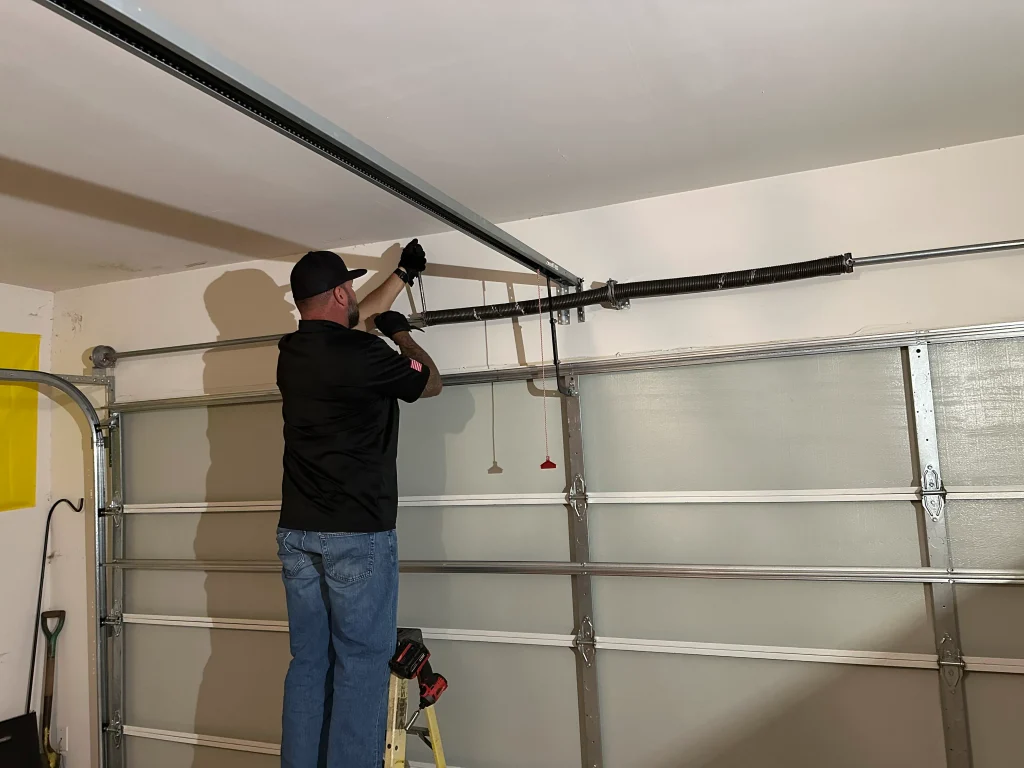
1. The Cycle Rating of the Springs You Actually Have
The single biggest factor is what was installed on your door in the first place. Most builders and many repair companies install the cheapest option, a spring rated for about 10,000 cycles. Upgraded springs are rated at 20,000, 50,000, or even 100,000 cycles, and they cost more up front because they use heavier wire and a longer coil.
This matters more than any maintenance habit. No amount of lubrication turns a 10,000 cycle spring into a 20,000 cycle spring. If your home was built with builder grade hardware and nobody has upgraded it since, assume you are on the low end of the range. The cycle rating is a manufacturing specification, and industry standards for door and spring performance are published by the DASMA (the Door and Access Systems Manufacturers Association), which is the trade body that defines how these components are classified and tested.
How to Find Out How Long Your Garage Door Springs Will Last
Look for a colored paint stripe or a stamped tag on the spring. Color coding identifies wire size and wind direction, not cycle life, but a technician can read the wire size, inside diameter, and length together and tell you the rating. If there is no documentation and no tag, a visual measurement is the only way to know.
Call a pro if: you cannot safely read the spring without climbing on a ladder above a loaded door, or you want the cycle rating confirmed before deciding between a standard and an upgraded replacement.
2. How Many Times the Door Opens Every Day
Two identical springs on two identical doors will fail years apart if one household uses the door twice a day and the other uses it eight times. The garage door is the main entrance in most North Texas homes, which pushes daily cycle counts higher than people expect.
Count honestly. Every trip out and back is two cycles, not one. Two working adults leaving and returning, one school run, and one evening errand is already eight cycles a day. At that rate a 10,000 cycle spring is finished in about three and a half years, not twelve. Households with teenage drivers, a home based business, or a detached shop see the same compression. This is the most common reason a homeowner in Celina, Prosper, or McKinney is surprised by a spring failure on a house that is barely five years old.
Why Your Garage Door Springs Wear Out Faster Than Expected
Track your real usage for one week, multiply by 52, then divide your cycle rating by that number. That figure is your replacement timeline in years, and it is far more useful than any general guideline. If the math lands under five years, an upgraded high cycle spring is the cheaper option over the life of the door.
Call a pro if: your calculated timeline has already passed, or you are within a year of it and want the replacement scheduled rather than waiting for a break.
3. Whether You Have Torsion Springs or Extension Springs
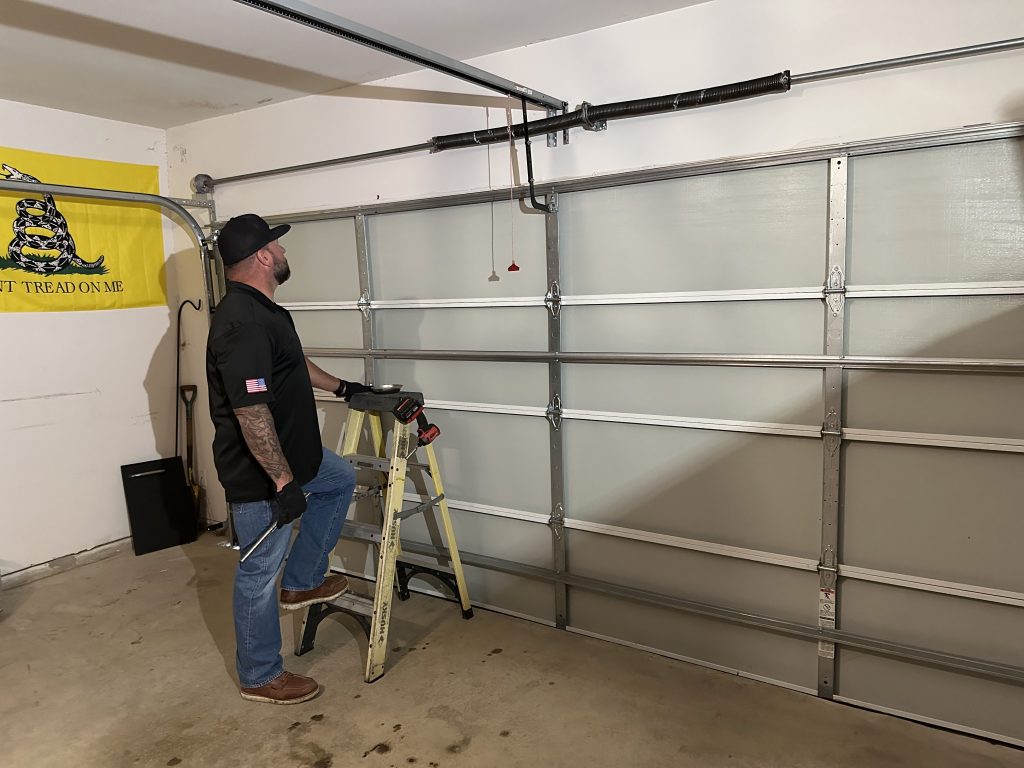
Torsion springs mount horizontally on a shaft above the door opening. Extension springs run along the horizontal tracks on either side and stretch as the door closes. The two systems do not wear at the same rate, and they do not fail the same way.
Torsion systems generally last longer, control the door more smoothly, and fail in place. Extension springs cycle under direct tension, wear faster in most installations, and can become a projectile when they snap unless safety cables are run through them. If your door has extension springs without safety cables, that is a safety defect to correct now regardless of the spring’s age. This is also the point where many homeowners convert to a torsion setup, and a proper torsion spring repair or conversion resets your timeline to whatever cycle rating you choose to install.
How to Tell Which Type of Garage Door Spring You Have and Which Lasts Longer
Stand inside with the door closed and look up. A spring on a shaft above the opening means torsion. Springs stretched along the side tracks means extension. The differences go well beyond lifespan, and we break all of them down in Torsion vs Extension Springs: Which Lasts Longer? 7 Differences That Change Your Timeline.
Call a pro if: you have extension springs with no safety cables, or you want a quote on converting an extension system to torsion.
4. Lubrication and Basic Maintenance
Springs fail from metal fatigue, and fatigue accelerates when the coil is dry and gritty. Every cycle, the coils of a torsion spring rub against each other. Lubricated, that contact is smooth. Dry, it grinds, and the microscopic scoring becomes the crack that eventually splits the wire.
Twice a year, spray the full length of the spring with a garage door specific lubricant or a light silicone spray, then run the door a few cycles to work it in. Wipe the excess. Do the rollers, hinges, and bearing plates at the same time. What you must not use is WD-40, which is a solvent and a water displacer rather than a lubricant, and it strips what protection is there. Grease is also wrong, since it collects dust and turns abrasive. Homeowners in McKinney and Prosper who keep to a twice yearly schedule reliably get more life out of the same hardware than neighbors who never touch it.
Why Garage Door Spring Maintenance Extends Replacement Intervals
Maintenance will not add cycles to the rating, but it prevents the premature failures that cut a spring’s life short by years. Lubrication, plus keeping the door balanced, is the entire homeowner side of spring longevity. Everything else belongs to a technician.
Call a pro if: the spring is visibly rusted, the coils are separating unevenly, or you hear grinding and squealing that lubrication does not quiet down.
5. Whether the Springs Were Sized Correctly for Your Door
An undersized spring is the most common cause of a spring that dies years early. Spring tension has to match door weight. If the spring is too weak, it works past its designed load on every single cycle and fatigues fast. If it is too strong, the door slams open, stresses the opener, and wears the top section and hinges.
This shows up after a door replacement, a panel swap, or an insulation upgrade, because any of those changes the door’s weight while the original springs stay in place. It also shows up when a previous repair used whatever spring was on the truck instead of the correct one. The symptoms are a door that drifts or slams instead of holding still, an opener that strains, and a spring that fails again within a few years of the last torsion spring replacement.
How to Check If Your Garage Door Springs Are the Right Size
Pull the opener release with the door closed, then lift the door by hand to waist height and let go. Correctly sized springs hold it nearly still. If it drops, the springs are weak. If it flies up, they are too strong. The measurements that determine the correct spring are covered in What Size Garage Door Spring Do You Need? 5 Measurements to Take First.
Call a pro if: the door fails the balance test, or you have added insulation, replaced panels, or installed a new door without having the springs recalculated.
6. North Texas Heat, Humidity, and Temperature Swings
Steel expands and contracts with temperature, and a spring that is already carrying a heavy load all day is doing that work in a garage that swings from the low 30s in January to well over 100 degrees in August. Those swings add fatigue on top of the mechanical cycles.
Humidity is the other half. Collin County gets long humid stretches, and an uncoated or unlubricated spring in an unconditioned garage will develop surface rust. Rust creates the stress concentration where the wire eventually breaks. This is why spring calls in Celina, Prosper, and McKinney cluster in the first hard cold snap of the year. The cold does not create the problem, it finishes a spring that was already at the end of its life.
Why Cold Weather Makes Garage Door Springs Break in Celina TX
If your springs are near the end of their calculated cycle life, schedule the replacement in the fall rather than waiting. A spring that is going to break in December will break in December, and it will do it on the coldest morning when you are already late.
Call a pro if: your door struggles or reverses only in cold weather, which usually means the springs have lost tension and the opener is compensating.
7. Whether Both Springs Are the Same Age
On a two spring door, both springs were installed on the same day and have carried the same number of cycles. When one breaks, the other has the same wear history and the same fatigue. It has not failed yet, but it is running on the same clock.
Replacing only the broken one leaves a new spring paired with a spent one. The old spring usually fails within months, the door is out of balance until it does, and you pay for a second service call plus a second trip. This is also why a partial repair is a false economy: the labor to access and wind the springs is the same whether you replace one or two. If you are booking broken garage door spring repair, ask what the pair costs before you decide.
Why You Should Replace Garage Door Springs in Pairs
Match the pair on age and rating so the door stays balanced and the timeline stays predictable. The full reasoning, including the cases where a single replacement is defensible, is in Should You Replace Both Garage Door Springs at Once? 6 Reasons Technicians Say Yes.
Call a pro if: one spring has broken, or you have mismatched springs and are not sure how old each one is.
Safety: What You Can Do and What You Must Not Touch
A wound torsion spring stores an enormous amount of energy. Releasing it without the correct winding bars and technique is one of the most dangerous repairs in a residential home, and it causes serious injuries every year. The CPSC has documented garage door and opener injuries for decades, and spring work sits firmly in the professional category.
There is no version of this where the right screwdriver makes it safe. Do not use screwdrivers or rebar in place of winding bars, do not remove a spring from the cone under tension, and do not work on a door with the cables still loaded.
| Task | DIY safe | Call a pro |
| Twice yearly spring and roller lubrication | Yes | No |
| Manual balance test (opener released, door lifted by hand) | Yes | No |
| Visual inspection for gaps, rust, cable slack | Yes | No |
| Reading the paint stripe or spring tag | Yes | No |
| Tightening loose track brackets or lag bolts | Yes, with care | If the track is bent |
| Adjusting opener force or travel limits | Sometimes | If the door reverses or slams after adjusting |
| Replacing cables or drums | No | Always |
| Winding, unwinding, or adjusting a torsion spring | Never | Always |
| Replacing a broken torsion or extension spring | Never | Always |
| Converting extension springs to torsion | Never | Always |
The Bottom Line
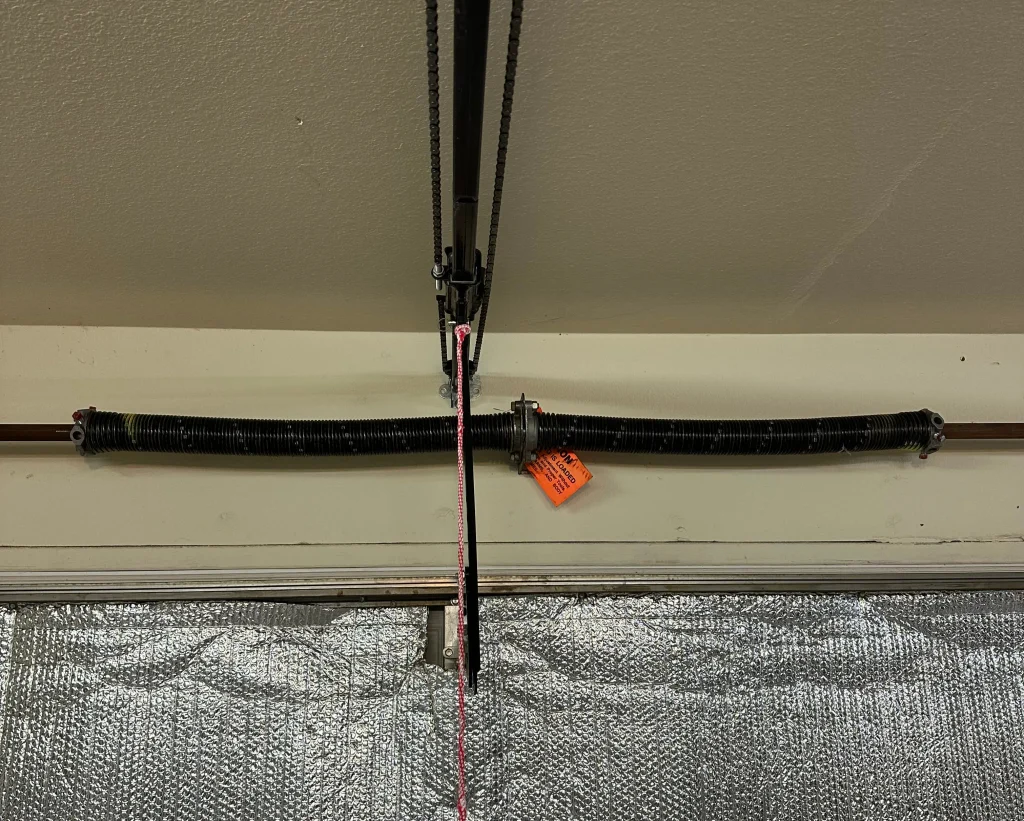
Do the cycle math on your own door, then schedule the replacement before the spring makes the decision for you. If your springs are past their calculated life, or the door already feels heavy by hand, get eyes on it now rather than after your car is sealed in the garage.
Alliance Overhead Door replaces garage door springs across Celina, Prosper, McKinney, and the surrounding Collin County communities, with matched pair replacement and upgraded high cycle options available. Book same day service or request a free quote for garage door repair and we will get your door back in balance.
Frequently Asked Questions
2. Can I still open the garage door if the spring is broken?
You should not try. The springs, not the opener, carry the door's weight. With a spring broken, you are lifting the full weight of the door, which can run from 150 to more than 400 pounds depending on material and insulation. Forcing it by hand or with the opener bends tracks, snaps cables, and burns out opener gears. Leave it down and use another exit.
3. How long can I safely wait to replace a broken spring?
Treat it as same day if the car is trapped or the door is stuck open, since a door stuck open is a security problem overnight. If the door is closed and you have another way in and out, a day or two is manageable. What you should not do is keep cycling it in the meantime, because that is where the expensive secondary damage happens.
4. I heard a loud bang in the garage and nothing looks wrong. What was it?
That is one of our most common calls, and it is almost always a torsion spring letting go. The sound is startling, often mistaken for a gunshot or something falling off a shelf. Go look at the spring above the door: a roughly two inch gap in the middle of the coil means it has snapped. The door will still look normal until someone tries to open it.
5. Both of my springs failed within a few weeks of each other. Why?
Because they were the same age with the same cycle count. Springs installed together wear together, so when one goes, the other is typically weeks or months behind. In our experience this is the single most common reason a homeowner pays for two service calls when one would have covered it.
6. How much does garage door spring replacement cost?
It depends on whether you need one spring or a matched pair, whether you are installing standard or high cycle springs, and whether the cables and bearings need attention at the same time. A standard pair replacement is generally a few hundred dollars installed, with upgraded high cycle springs adding a moderate premium that pays for itself if your door gets heavy daily use. We quote before we start, and we will tell you if the door needs anything beyond the springs.
7. Can I replace a garage door spring myself?
We do not recommend it, and this is not upselling. A wound torsion spring holds enough stored energy to break bones and worse, and it releases in a fraction of a second if the winding bars slip. The parts are inexpensive and available online, which is exactly what makes this dangerous. The tools, the technique, and knowing the correct spring for your door weight are the parts you cannot buy in a kit.
8. Does a broken spring damage the garage door opener?
It can, and repeatedly trying the opener after a spring breaks is the fastest way to find out. Openers are designed to guide a balanced door, not lift a dead weight. We see stripped gears, burned out motors, and bent top sections from a handful of attempts after a break. One press to discover the problem is understandable, six is a second repair bill.
9. Is there anything I can do to make my springs last longer?
Lubricate them twice a year with a garage door lubricant or light silicone spray, never WD-40 or grease. Run the manual balance test a couple of times a year so you catch tension loss early. Keep the door itself in good shape, since a heavier or sagging door loads the springs harder. Beyond that, longevity is decided by the cycle rating you install and how often you use the door.
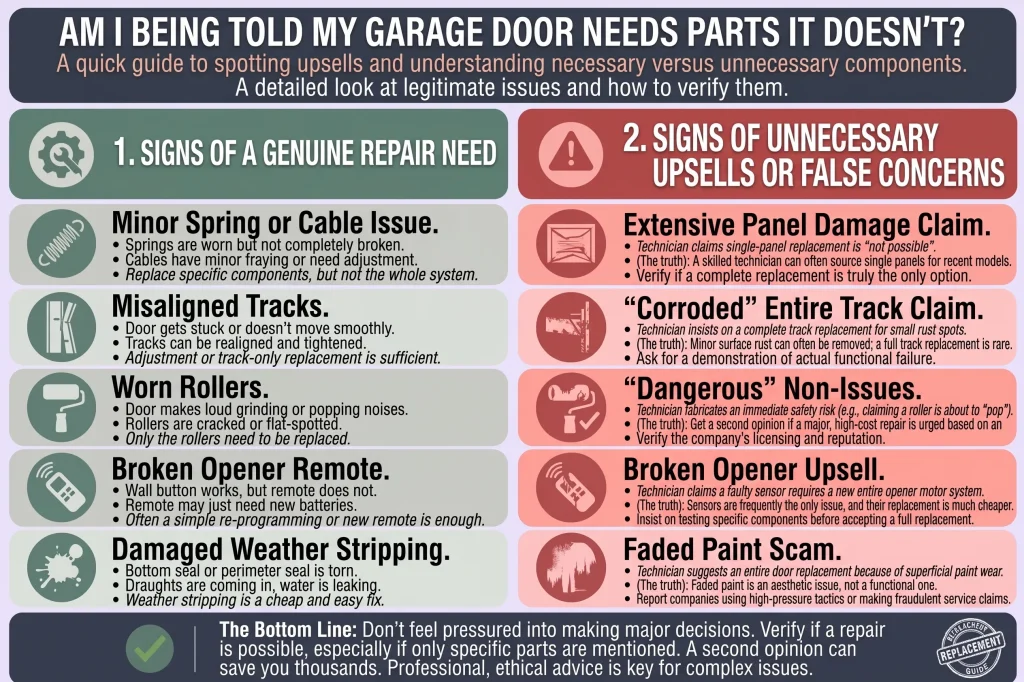
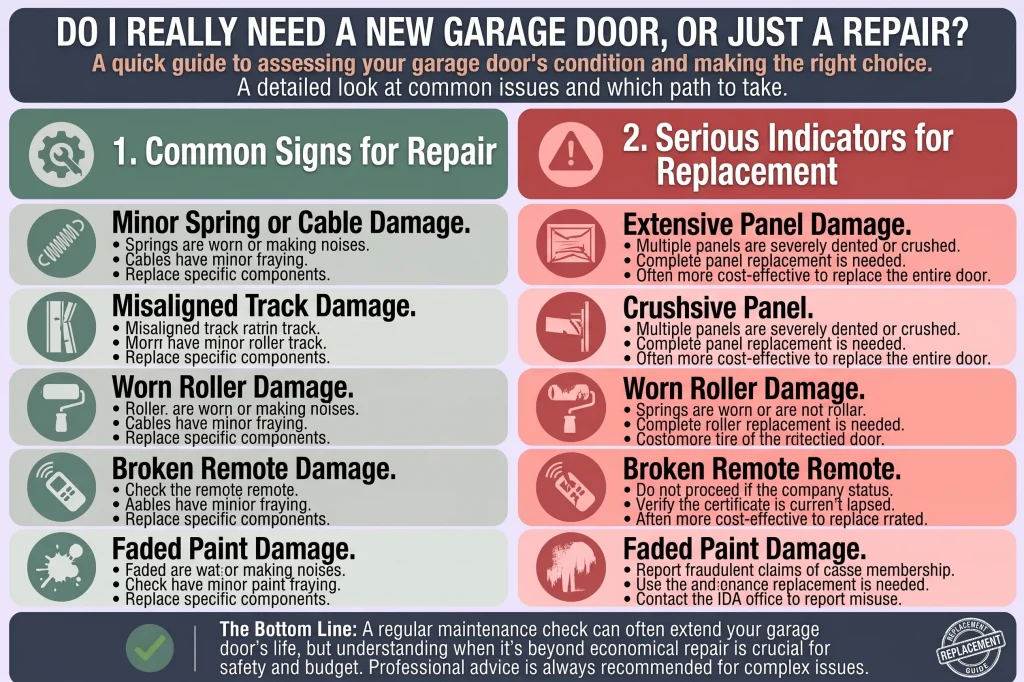
10. Should I replace the whole door instead of just the springs?
Usually no. Springs are a wear component on an otherwise sound door, and replacing them is a fraction of the cost of a new door. The conversation changes if the door has cracked or rotted sections, repeated panel damage, or the springs are failing again because the door has grown too heavy for its hardware. We will tell you honestly which situation you are in rather than quoting a door you do not need.