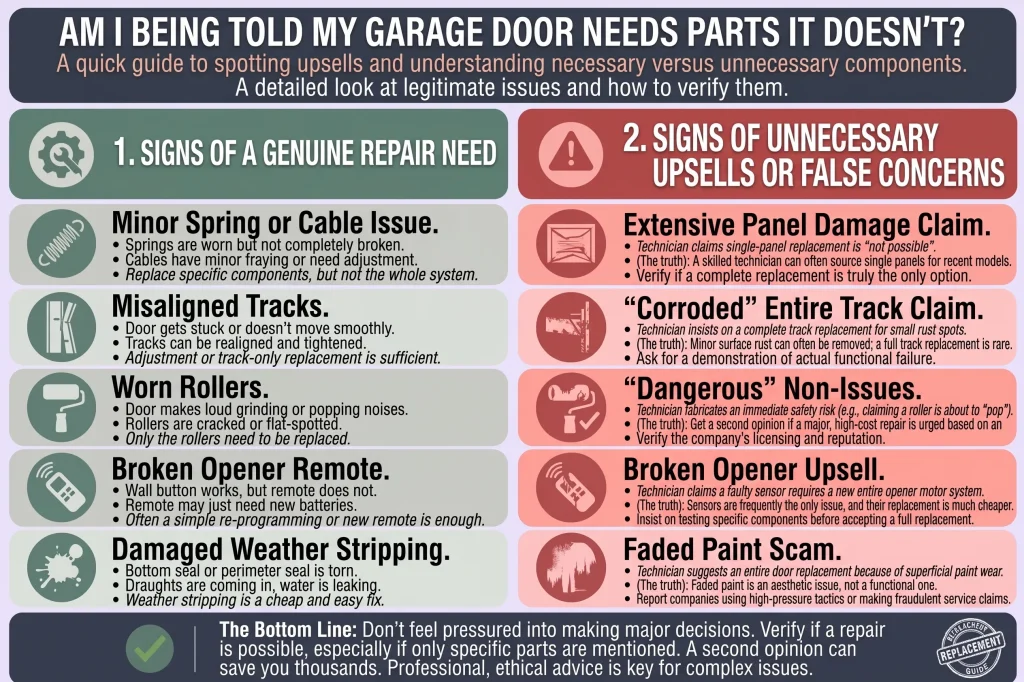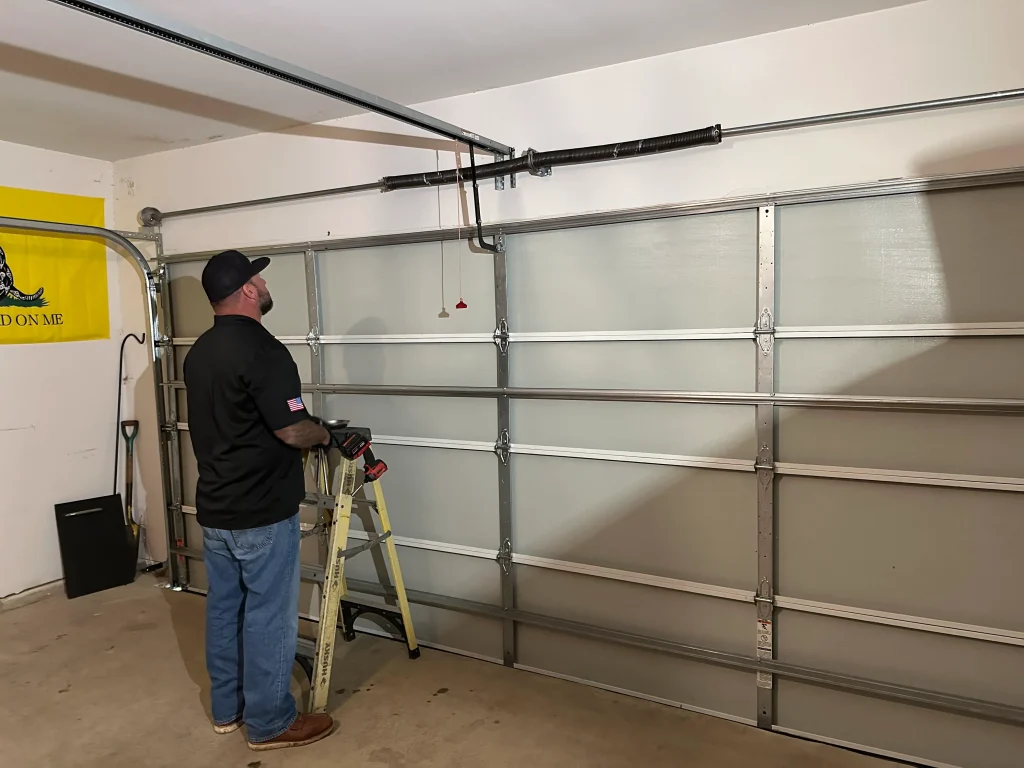
Yes. If your door has two springs and one has broken, replace both. The surviving spring was installed on the same day, has carried the same number of cycles, and has the same metal fatigue as the one that just failed. It typically breaks within months. Because the labor to access and wind the springs is identical whether you do one or two, replacing the pair costs only the price of the second spring, while replacing one means paying for a whole second service call later. The only common exception is a genuinely new spring paired with an old one, covered below.
Key Takeaways
- Springs installed together wear together. When one fails, the other has the same cycle count and is usually weeks or months behind.
- The labor is the same for one spring or two, so the pair costs only the additional part. A second visit costs the full call again.
- A new spring paired with a spent one leaves the door out of balance, which wears the opener, cables, drums, and top section.
- The new spring in a mismatched pair carries more than half the load, so it fails early too. You lose the cycle rating you paid for.
- Matched pairs keep wire size, inside diameter, length, and wind direction consistent, which is what warranty coverage and correct balance depend on.
- The one defensible single replacement is when the surviving spring is genuinely recent, ideally under a year, and documented.
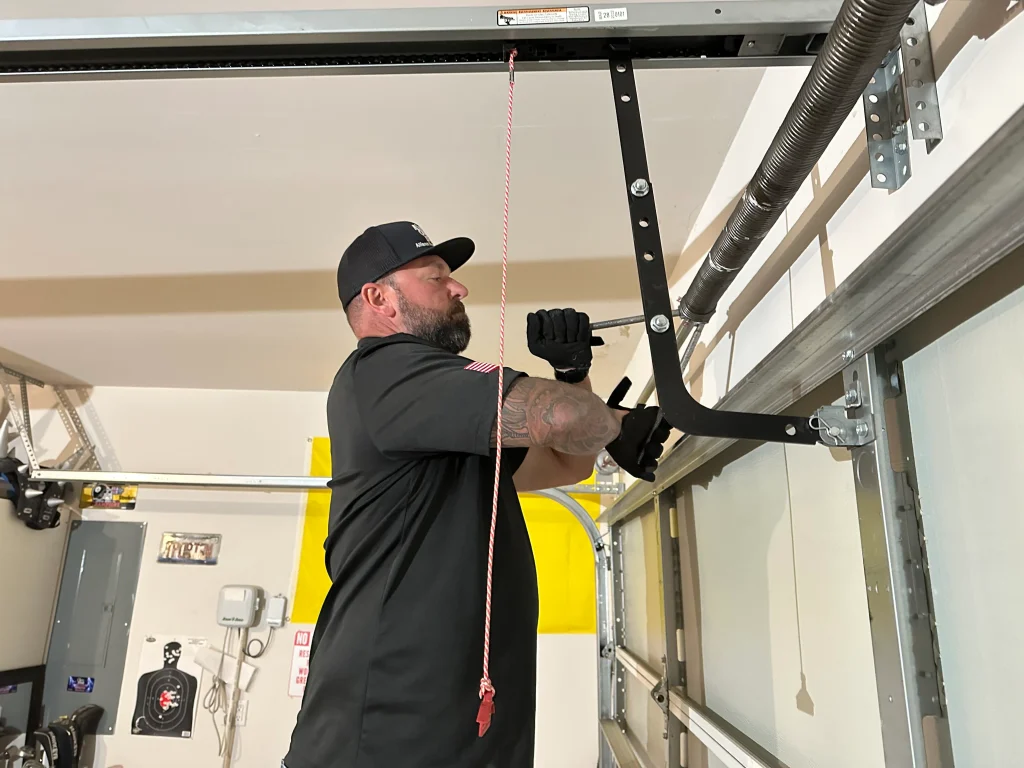
1. The Surviving Spring Has the Same Cycle Count as the One That Broke
This is the whole argument in one sentence. Springs do not fail from age, they fail from cycles, and both of your springs have been through the exact same number of them. The one still intact is not healthy, it is just a few hundred cycles behind.
Metal fatigue is cumulative and invisible. The microscopic cracking that split the broken spring has been developing in the other one at the same rate, on the same schedule, under the same load. Nothing about it looking fine tells you anything, because a spring at 9,900 cycles out of 10,000 looks identical to one at 2,000. If you want to understand what sets that cycle count in the first place, that is the subject of How Often Should Garage Door Springs Be Replaced? 7 Factors That Decide Your Timeline.
Why One Broken Garage Door Spring Means the Other Is Close Behind
Ask the technician for the cycle rating and the approximate age of the surviving spring. If the two numbers say it has used most of its life, replacing it now is not an upsell, it is the only version of this repair that does not require a second visit.
Call a pro if: one spring has broken and you want the remaining spring’s wear assessed before you decide.
2. The Labor Is the Same Whether You Replace One Spring or Two
Almost all of the cost of a spring job is getting to the springs and safely handling the tension. The technician still has to secure the door, release and rewind the shaft, set the cables, and rebalance the door. That work does not double when the second spring goes on.
So the real comparison is the price of one extra spring today against a complete second service call in a few months, including the trip, the labor, and another morning of your door being out of service. In our service area that second call also tends to arrive at the worst time, since springs give out on the first cold morning of the season when everyone else is calling too. When homeowners in Celina, Prosper, and McKinney book broken garage door spring repair, the pair price is the one to ask for up front.
Does Replacing Both Garage Door Springs Cost Twice as Much
No. Expect the pair to cost meaningfully less than two separate single replacements, because you pay the labor once. Ask for both quotes side by side and the math makes itself.
Call a pro if: you have been quoted for a single spring and want the matched pair price for comparison before you commit.
3. A Mismatched Pair Leaves the Door Out of Balance
A new spring and an old spring do not pull with the same force. The old one has lost tension over thousands of cycles, so the new one does more of the lifting and the door no longer sits balanced on the shaft.
You can feel it. Release the opener with the door closed, lift by hand to waist height, and let go. A balanced door holds nearly still. A mismatched door drifts down, creeps up, or feels heavier on one side. That imbalance also puts uneven load on the cables and drums, which is how a spring problem turns into a cable and drum problem. Correct balance depends on the springs being specified to the door’s actual weight, and the measurements that determine that are covered in What Size Garage Door Spring Do You Need? 5 Measurements to Take First. This is one of the most common conditions we find on doors in McKinney where a previous repair replaced only the failed side.
How to Tell If Your Garage Door Springs Are Mismatched
Look at the two springs. Different paint stripe colors, visibly different coil spacing, or one bright and one rusted means they are not a matched pair. Run the balance test to confirm the door is compensating.
Call a pro if: the door fails the balance test, or the two springs look different from each other.
4. An Unbalanced Door Wears Out the Opener and the Rest of the Hardware
The opener is a guide, not a lift. It is engineered to move a door that the springs have already counterweighted to near zero. When the springs are mismatched and the door is heavy, the opener absorbs the difference on every cycle.
That shows up as strained motors, stripped nylon gears, slipping belts or chains, and force settings cranked up past where they should be. Rollers and hinges wear faster, and the top section takes stress it was not designed for. Replacing a spring is a routine repair, while replacing an opener plus a spring is a different conversation entirely, and it is the reason we push matched pairs during any torsion spring repair. We see this pattern regularly on homes in Prosper where the door was left running unbalanced for a year or more.
Why an Unbalanced Garage Door Damages the Opener
If your opener has started straining, humming, or reversing partway, have the spring balance checked before you replace the opener. The opener is often the symptom rather than the problem.
Call a pro if: the opener strains, the door reverses on its own, or someone has increased the force settings to make the door close.
5. The New Spring Carries More Than Its Share and Fails Early
This is the reason most homeowners have not heard, and it is the one that costs the most. Pair a new spring with a weak one and the new spring picks up the slack on every single cycle. It is now working past the load it was rated for.
A spring rated for 10,000 cycles reaches that number only under its designed load. Overload it and the cycle count drops, sometimes sharply. So the single replacement you chose to save money frequently fails years earlier than it should, and you pay for a third spring. Spring wire is manufactured to published material standards, including the ASTM specifications for oil tempered spring steel, and those ratings assume the spring operates at its designed tension rather than covering for a spent partner. That is the argument we make on nearly every torsion spring replacement where only one side had failed previously, and it is the pattern behind most of the repeat spring calls we take in Prosper.
Why a Single Replacement Garage Door Spring Fails Sooner
If you have replaced one spring in the last couple of years and it has already failed again, the surviving old spring is the likely cause. Replace the pair this time and the timeline resets properly.
Call a pro if: a spring you replaced recently has failed again, which usually points to an unmatched partner or incorrect sizing.
6. A Matched Pair Keeps the Specifications and the Warranty Intact
Springs are specified by four things: wire size, inside diameter, overall length, and wind direction. A matched pair means both sides were calculated for the same door weight and installed at the same tension. That is what a balance calculation assumes, and it is what most spring warranties assume too.
Mix an old spring in and you no longer have a specified system, you have a compromise. Many manufacturers and installers will not warrant a single spring installed against an undocumented one, because the load conditions are unknown. It also matters at resale: garage doors and operators are inspected under the TREC standards of practice in Texas, and a door that fails a manual balance test is a line item on the inspection report your buyer reads. Note that the specification set differs entirely between spring systems, which is why we cover both in Torsion vs Extension Springs: Which Lasts Longer? 7 Differences That Change Your Timeline. Homeowners preparing to list in McKinney usually want the pair done for exactly this reason.
Why Matched Garage Door Springs Protect Your Warranty
Ask for the wire size and cycle rating in writing on the invoice for both springs. That documentation is what makes a future warranty claim straightforward, and it tells the next technician what is on your door.
Call a pro if: you are selling the home, or you want the spring specifications documented for warranty purposes.
When Replacing Just One Spring Is Actually Reasonable
We would rather be honest than absolute, so here are the cases where a single replacement is defensible:
- The surviving spring is genuinely new. If one spring was replaced within the last year and you have the invoice showing its wire size and cycle rating, matching a new spring to it is fine. Undocumented and “I think it was a couple of years ago” does not count.
- The failure was not fatigue. A spring damaged by a specific event, such as a strike from a vehicle or an installation error, has not necessarily used its cycle life. This needs a technician’s eyes on it, not a guess.
- Your door only has one spring. Many single car doors are designed for a single torsion spring. There is no pair to match. Adding a second spring is sometimes worth discussing as an upgrade for heavier doors, but it is not required.
- A documented emergency. If cash flow means one spring today or a door stuck shut for a month, do the one and book the second. Just book it, rather than waiting for the break.
What does not qualify: the other spring looking fine, the door still opening afterward, or a quote that only priced one side.
Safety First: This Is Not a DIY Repair
A wound torsion spring stores enough energy to cause serious injury or death when it releases uncontrolled. Winding bars, correct technique, and the right spring for the door weight are not optional, and screwdrivers or rebar are not substitutes for winding bars. Spring parts are cheap and available online, which is exactly what makes this repair dangerous.
| Scenario | Replace one | Replace both |
| One spring broke, other is 5 or more years old | No | Yes |
| One spring broke, other replaced under 1 year ago with documentation | Acceptable | Optional |
| Both springs original to the door, one failed | No | Yes |
| Springs are visibly mismatched already | No | Yes |
| Door fails the manual balance test | No | Yes |
| Single spring door by design | Yes, no pair exists | Not applicable |
| Failure caused by vehicle strike, other spring young | Acceptable | Technician’s call |
| Preparing to sell the home | No | Yes |
The Bottom Line
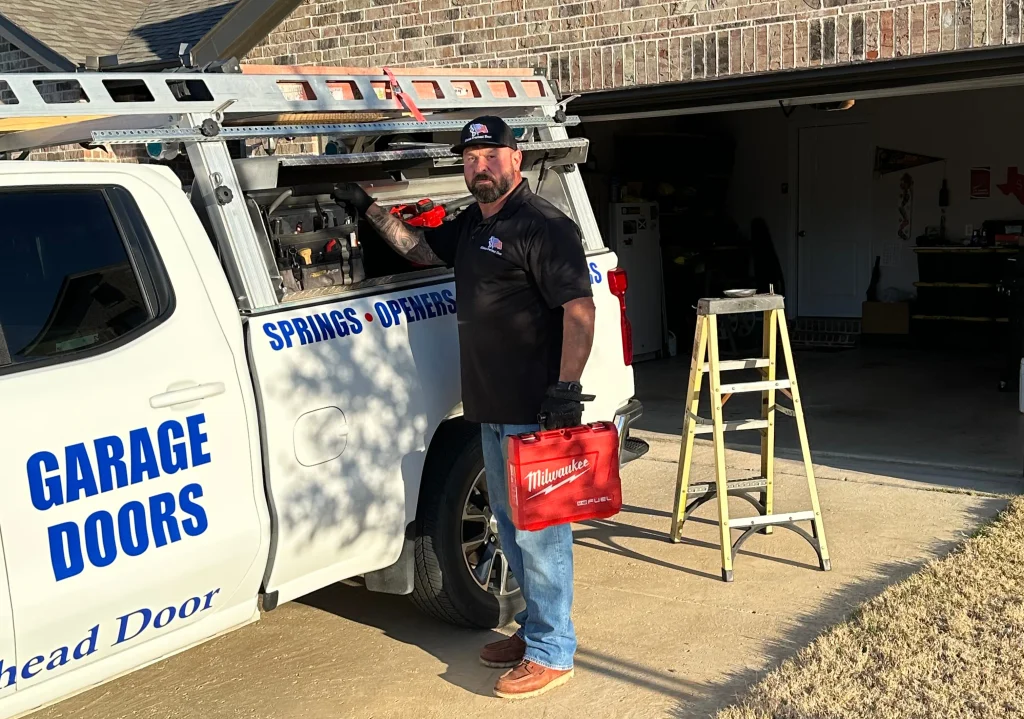
If one spring is gone and the other is the same age, replace both. You pay the labor once, the door stays balanced, the opener stops absorbing the difference, and you get the full cycle life out of the springs you just bought. The only real exception is a documented, genuinely recent spring on the other side.
Alliance Overhead Door replaces garage door springs as matched pairs across Celina, Prosper, McKinney, and the surrounding Collin County communities, with standard and high cycle options quoted side by side. Book same day service or request a free quote for garage door repair and we will get your door back in balance.
Frequently Asked Questions
2. Does replacing both springs cost double?
No, and this is the part homeowners are usually surprised by. The labor is the same either way, so you are only adding the cost of one more spring. Two separate visits means paying the full call twice. Ask for both prices side by side and the difference is obvious.
3. If I only replace one, how long will the old spring last?
There is no honest precise answer, which is why we do not give one. In our experience the surviving spring commonly fails within a few months to a year when it was original to the door. It can be sooner, because the new spring is now overloading it, and it can be a bit longer. What it will not be is years.
4. Can a technician tell how old my springs are?
Usually close enough to make a decision. We can read the wire size and diameter, look at rust and coil wear, check for a stamped tag or paint stripe, and factor in the age of the home and how often you use the door. If a prior invoice exists, that settles it, which is why we put the specs in writing on ours.
5. My garage door only has one spring. Does any of this apply to me?
Not the pairing part, no. Plenty of single car and lighter doors are engineered for one torsion spring, so there is nothing to match. What still applies is the cycle math and the balance test. On heavier doors running a single spring, we will sometimes talk through a two spring conversion, but that is an upgrade rather than a repair.
6. I replaced one spring last year and the other just broke. What now?
Replace the broken one and have the newer spring inspected while the technician is there. If last year's spring is documented and still within its rating, matching to it is reasonable. If it has been carrying extra load for a year, its remaining life is shorter than the invoice suggests, and it is worth knowing that before you decide.
7. Do both springs have to be the exact same size?
For a standard two spring torsion setup, yes. Wire size, inside diameter, length, and wind direction all have to be correct as a set, with the two springs wound in opposite directions. Mixing sizes is how doors end up pulling to one side and how cables jump their drums.
8. Will replacing both springs make my door work better than before?
Often noticeably, especially if the door has been unbalanced for a while. Customers tell us the door is quieter, moves more evenly, and the opener stops straining. If your door has been slow or jerky for months, some of that was the springs rather than the opener.
9. How long does replacing both springs take?
For a straightforward residential door with clear access, this is typically a single visit measured in under an hour of work rather than a whole day. It runs longer if the cables, drums, bearings, or shaft need attention too, and we will tell you before we start if we find that.
10. If only one spring broke, is the other one covered under warranty?
That depends on the original warranty terms and whether the spring failed within its rated cycles. Worth knowing: many warranties are written for a matched pair operating at the specified load, so a spring that has been paired with a spent one can fall outside coverage. Keeping the invoice with both springs' specifications is what protects you here.