Torsion springs last longer. A standard torsion spring is rated for roughly 10,000 cycles and commonly reaches 7 to 12 years in a typical home, while extension springs on the same door usually deliver noticeably fewer usable years because they stretch under direct tension and wear unevenly. Torsion springs also fail in place instead of releasing across the garage, control the door more smoothly, and can be upgraded to 20,000 cycles or more. Extension springs are cheaper up front and need less headroom, which is the only real reason they are still installed. If your door has extension springs and no safety cables, address that now.
Key Takeaways
- Torsion springs typically outlast extension springs on the same door, and they are available in high cycle ratings that extension springs cannot match.
- Extension springs stretch and relax on every cycle, which fatigues the coil ends faster than the twisting load a torsion spring carries.
- A failing torsion spring stays on its shaft. A failing extension spring can travel across the garage unless a safety cable is run through it.
- Torsion systems hold the door balanced through the whole travel, so the opener works less and the hardware lasts longer.
- Extension springs win on two points only: lower up front cost and less headroom required above the door.
- Converting an extension system to torsion is a same day job on most doors, and it resets your timeline to whatever cycle rating you choose.
1. Cycle Life: Torsion Springs Simply Last More Cycles
Start here, because this is the answer to the question. Both spring types are rated in cycles rather than years, one cycle being a full open and a full close. A standard torsion spring is built for about 10,000 cycles. Extension springs are also sold at nominal ratings, but in practice they deliver fewer usable cycles on the same door.
The reason is the type of stress. A torsion spring converts the door’s weight into twist along a length of wire wound around a shaft, distributing the load across the whole coil. An extension spring is pulled longer and shorter on every cycle, and that tension concentrates at the coil ends and the hooks, which is exactly where they break. Same door, same number of openings, different rate of fatigue. The full set of variables that decide your replacement interval is covered in How Often Should Garage Door Springs Be Replaced? 7 Factors That Decide Your Timeline.
Why Torsion Springs Last Longer Than Extension Springs
Divide the cycle rating by your daily open and close count to get your timeline in years. Because extension springs give up cycles to hook and end wear, treat their nominal rating as optimistic rather than a promise.
Call a pro if: you want the actual cycle rating of the springs currently on your door confirmed before deciding whether to replace or convert.
2. How They Mount and Carry the Load
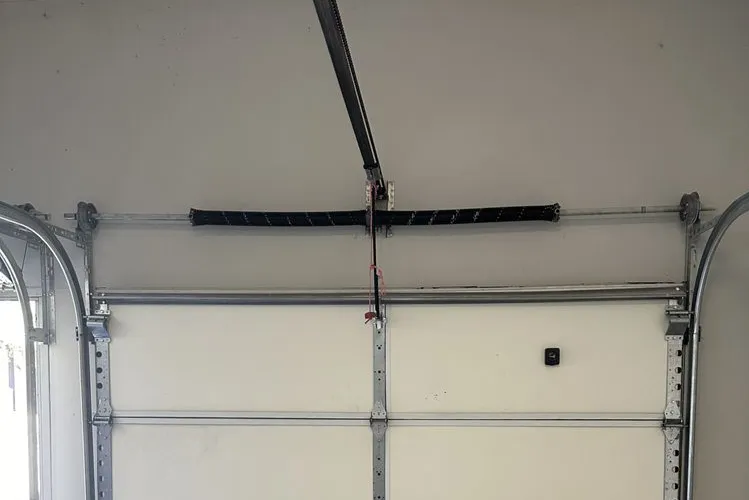
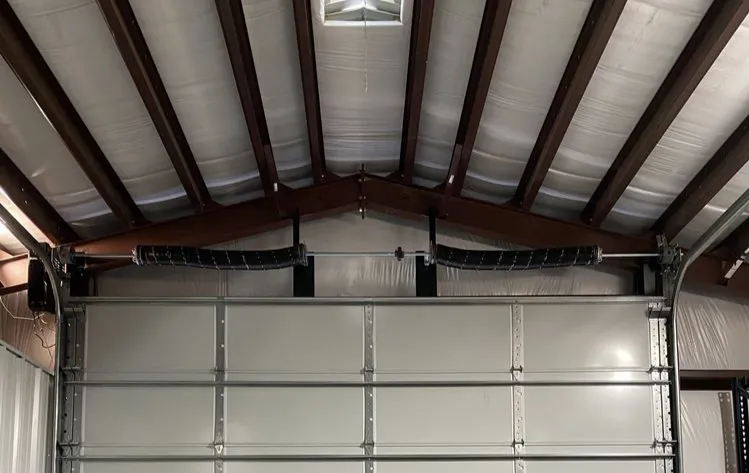
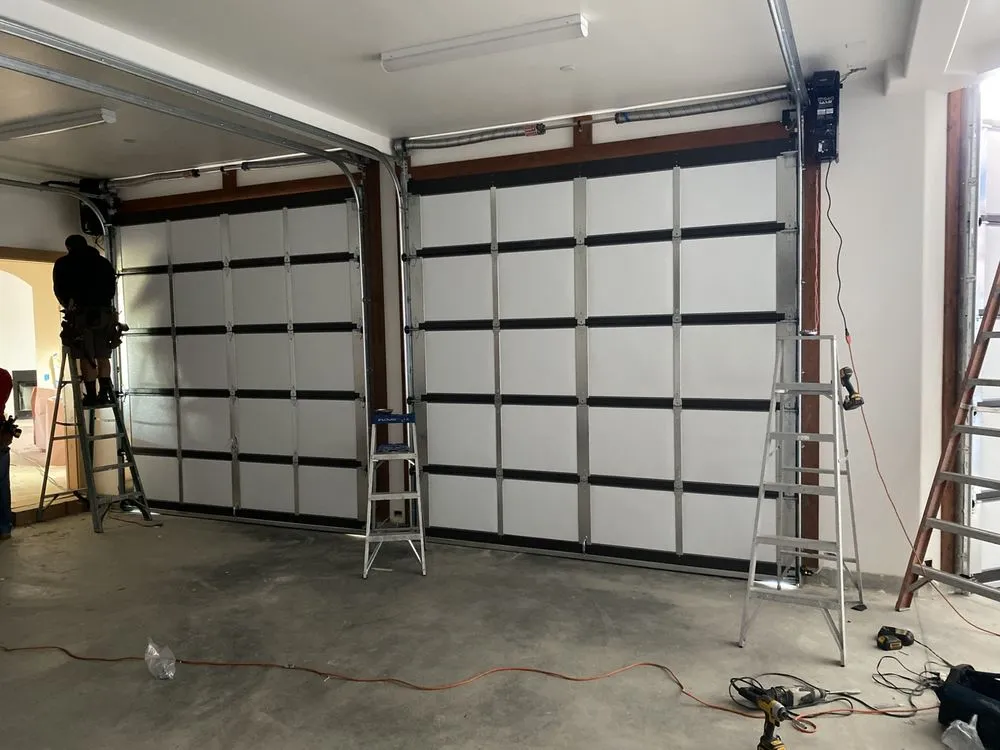
Torsion springs mount horizontally on a steel shaft above the door opening, held by a center bracket and end bearing plates. As the door closes, cables wind onto drums at each end of the shaft and the spring winds tighter. Extension springs run parallel to the horizontal tracks on either side of the door, anchored at the back and connected through a pulley system at the front.
That difference decides everything downstream. The torsion shaft is a single balanced assembly, so both sides pull through the same component. Extension springs are two independent systems with their own pulleys, cables, and anchor points, which means more parts that can wear, stretch, or come out of alignment. More parts also means more places for a small problem to become a stuck door, which is why a torsion spring repair is usually a more contained job than chasing a fault through an extension setup.
How to Tell If You Have Torsion or Extension Garage Door Springs
Stand inside with the door closed and look up. A spring or two on a shaft above the opening means torsion. Long springs stretched along the tracks on each side means extension. That thirty second check tells you which half of this article applies to you.
Call a pro if: you cannot identify your system, or you see a mix of hardware that does not match either description.
3. How They Fail: In Place Versus Across the Garage
A torsion spring that breaks stays on the shaft. You get a loud bang, a roughly two inch gap in the coil, and a door that will not lift. It is startling and inconvenient, but the broken parts stay where they were.
An extension spring under tension holds energy along its length, and when it snaps without a safety cable running through the middle, the pieces can travel. That is why safety cables exist, and why an extension system without them is a defect to correct regardless of the spring’s remaining life. The CPSC has tracked garage door and opener injuries for decades, and this failure mode is the reason extension springs carry a reputation that torsion springs do not. We still find uncabled extension systems on older homes around Celina and Prosper, and it is the first thing we flag when we see one.
Why Extension Springs Need Safety Cables
Look for a cable threaded through the center of each extension spring, anchored at both ends independently of the spring. If it is not there, get safety cables installed. It is an inexpensive part and it is not optional in practical terms.
Call a pro if: you have extension springs with no safety cable running through them, or a cable that is frayed, kinked, or disconnected.
4. Door Balance and Control Through the Travel
A torsion system holds the door balanced through the entire range of motion, because the spring’s tension unwinds proportionally as the door rises. Extension springs relax as the door opens, and the balance is less consistent from bottom to top.
You feel that as a door that moves smoothly and stops where you leave it versus one that is heavier at the bottom, lighter at the top, and prone to drifting. Uneven balance also loads the two sides of an extension system differently, so one side wears ahead of the other. Balance is also the reason spring pairs have to match each other, which is the subject of Should You Replace Both Garage Door Springs at Once? 6 Reasons Technicians Say Yes. When customers in McKinney tell us their door has always been jerky, an extension system near the end of its life is a frequent answer.
Why Torsion Springs Keep a Garage Door Better Balanced
Release the opener with the door closed, lift by hand to waist height, and let go. A correctly balanced door of either type holds nearly still. If yours drops or climbs, the springs are out of specification and the opener has been covering the difference.
Call a pro if: the door fails the balance test, drifts when you leave it partway open, or feels heavier on one side than the other.
5. Upgrade Options: High Cycle Springs Change the Math
This is the difference that matters most if you use your door heavily. Torsion springs are available in high cycle versions rated at 20,000, 50,000, and higher, built with heavier wire and a longer coil. Extension springs have no comparable upgrade path in residential use.
For a household running eight or more cycles a day, that is the difference between replacing springs every three to four years and replacing them once a decade. The classification and performance standards for these components are published by the DASMA, the trade association that defines how door and spring assemblies are rated and tested. When we quote a torsion spring replacement we price the standard and high cycle options side by side, because the upgrade often costs less over ten years than the standard spring does.
Why High Cycle Torsion Springs Are Worth the Upgrade
Count your real daily cycles for a week. If you are averaging six or more, ask for the high cycle quote. Below four, standard springs are usually the sensible choice.
Call a pro if: you want the standard and high cycle options quoted together so you can compare the cost per year rather than the sticker price.
6. Replacement Cost and Parts
Extension springs are cheaper as parts, and that is the honest reason builders choose them. Torsion springs cost more because there is more steel in them and the assembly includes the shaft, drums, bearings, and brackets.
Labor narrows the gap. Both jobs require releasing and setting tension safely, and an extension system with worn pulleys, stretched cables, or a missing safety cable can end up needing more parts than a torsion pair. Over a ten year horizon, the torsion system usually costs less per year because it needs replacing less often. When you call for broken garage door spring repair, ask for the cost per year rather than the invoice total, since that is the number that actually compares the two systems. That framing is one we walk through regularly with homeowners in Prosper and McKinney deciding whether to convert.
Are Torsion Springs More Expensive Than Extension Springs
Up front, yes. Per year of service, usually no. Get both quotes in writing with the cycle ratings included and divide.
Call a pro if: you have been quoted for an extension spring replacement and want a torsion conversion priced alongside it.
7. Headroom, Space, and Which Doors Get Which
Torsion springs need clear headroom above the door opening for the shaft and brackets, generally around 12 inches, though low headroom conversion kits exist. Extension springs need side room along the horizontal tracks instead. That is the practical constraint that decides some installations.
Extension springs still make sense on low headroom garages, on lighter single car doors, and where the existing hardware is sound and the budget is tight. Torsion is the better choice for double doors, insulated doors, any heavy door, and any door that gets used as the household’s main entrance. Whichever system you have, the spring has to be specified to your door’s actual weight, and the measurements that determine that are in What Size Garage Door Spring Do You Need? 5 Measurements to Take First. Most of the newer construction we service in McKinney and Prosper is torsion from the factory, so conversions come up mainly on older homes.
Can You Convert Extension Springs to Torsion Springs
On most doors, yes, and it is typically a same day job. Measure your headroom first, since under about 12 inches means a low headroom kit rather than a standard conversion.
Call a pro if: you want a conversion quoted, or you have less than 12 inches of headroom and need to know what your options are.
Safety: Neither Type Is a DIY Repair
Both spring types store enough energy to cause serious injury. A wound torsion spring releases in a fraction of a second if winding bars slip, and screwdrivers or rebar are not substitutes for proper winding bars. An extension spring under tension can travel when it lets go or when a hook releases unexpectedly.
Parts for both are inexpensive and easy to buy online, which is exactly what makes this repair dangerous. Lubrication, inspection, and the manual balance test are yours. Tension work is not.
| Torsion springs | Extension springs | |
| Typical cycle life | About 10,000 standard, up to 50,000+ high cycle | Fewer usable cycles on the same door |
| Mounting | Horizontal shaft above the opening | Along both horizontal tracks |
| Load type | Twisting along the coil | Direct stretch and tension |
| Failure behavior | Stays on the shaft | Can travel without a safety cable |
| Safety cables required | Not applicable | Yes, always |
| Balance through travel | Consistent | Less consistent |
| High cycle upgrade available | Yes | No |
| Part cost up front | Higher | Lower |
| Cost per year of service | Usually lower | Usually higher |
| Space needed | About 12 inches headroom | Side room along the tracks |
| Best suited to | Double, insulated, heavy, or high use doors | Low headroom garages, light single doors |
| Number of wear parts | Fewer | More: pulleys, cables, anchors |
The Bottom Line
Torsion springs last longer, fail more safely, hold the door balanced better, and can be upgraded to high cycle ratings that extension springs cannot match. Extension springs win only on up front cost and headroom. If you have extension springs, make sure safety cables are in place, then price a conversion the next time a spring needs replacing rather than paying for the same repair again in a few years.
Alliance Overhead Door services both spring systems and handles extension to torsion conversions across Celina, Prosper, McKinney, and the surrounding Collin County communities, with standard and high cycle options quoted side by side. Book same day service or request a free quote for garage door repair and we will tell you honestly which system your door should be running.
Frequently Asked Questions
2. Is it worth converting from extension springs to torsion?
In our experience, yes, on most doors that are staying put for a few more years. You get longer spring life, better balance, a safer failure mode, and access to high cycle upgrades. The exception is a low headroom garage or a light single door where the existing hardware is sound and you are not planning to keep the house long.
3. Are extension springs actually dangerous?
With safety cables correctly installed and in good condition, they are an accepted system that has been on millions of doors. Without safety cables, they are a real hazard, and that is one of the more common safety issues we find on older homes. If you are unsure whether yours have cables, that is worth checking today rather than at the next repair.
4. Why did my builder install extension springs if torsion is better?
Cost, usually, and sometimes headroom. Extension springs are cheaper as parts and faster to install, which matters when a builder is finishing dozens of homes. It is not a sign anything was done wrong, it just means the hardware was specified to a price rather than to a lifespan.
5. Do extension springs need replacing more often?
As a general pattern, yes. They lose tension gradually and their hooks and coil ends wear faster than the body of a torsion spring. Our rule of thumb from the field is that an extension system needs attention sooner than a torsion system on the same door with the same usage.
6. Can I mix a torsion spring and extension springs on one door?
No. They are different systems with different hardware, geometry, and load paths. A door runs one or the other. If a door appears to have both, something has been improvised and it needs a technician to look at it.
7. Does the spring type affect my garage door opener?
Indirectly, and it matters. The opener guides a door that the springs have counterweighted to nearly zero. A system that holds balance more consistently means the opener works less on every cycle, so it lasts longer. Openers on chronically unbalanced doors fail early, and we see that more often on worn extension systems.
8. Which spring type is quieter?
Torsion, generally, especially with nylon rollers and a good lubrication schedule. Extension systems have more moving parts, including pulleys, and each one is a potential squeak. If noise is your main complaint, the springs are only part of the answer and the rollers are usually the rest.
9. Does converting to torsion require a new garage door?
No. The conversion changes the spring hardware above and around the opening, not the door itself. What it does require is enough headroom for the shaft, or a low headroom kit if you are short on space. The door panels stay.
10. How much does a conversion cost compared to just replacing the extension springs?
A conversion costs more up front, since you are adding a shaft, drums, bearings, and brackets rather than swapping two springs. Over the life of the hardware it usually comes out ahead because torsion springs need replacing less often and can be upgraded to high cycle. We quote both so you can see the numbers next to each other.