Five numbers identify a garage door spring: wire size, inside diameter, overall length, wind direction, and the weight of the door it has to lift. Get all five right and the door balances, the opener coasts, and the spring delivers the cycle life you paid for. Get one wrong and the spring works outside its designed load and fails years early. Wire size and door weight are the two that matter most, and they are also the two most often guessed. Take these measurements only on a spring that is broken or fully unwound. Never measure or handle a spring that is still under tension.
Key Takeaways
- The five specifications are wire size, inside diameter, overall length, wind direction, and door weight. All five have to be correct together.
- Wire size is measured by counting coils across a set distance, not by eyeballing the thickness. A small error here produces a large tension error.
- Door weight is the number that validates the other four. Springs are calculated to lift a specific weight, not a specific door size.
- Wind direction is not optional. On a two spring door the springs wind in opposite directions, and installing two of the same hand will not work.
- Never measure a spring that is still wound. Take measurements from a broken or fully unwound spring, or have a technician do it.
- A spring that is close but not correct is the most common cause of a replacement that fails years early.
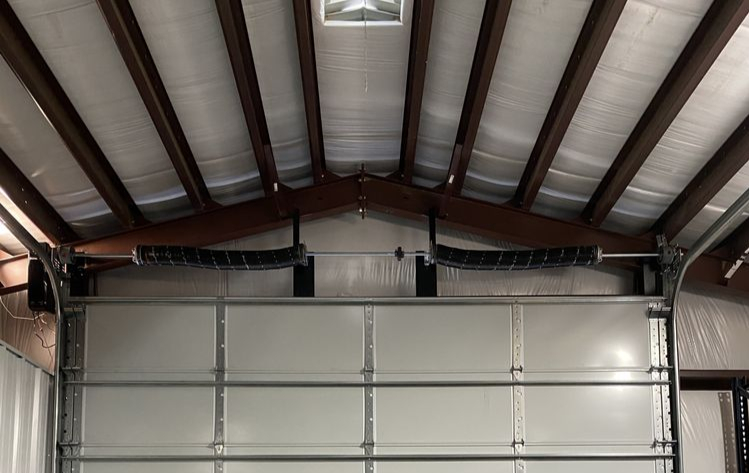
1. Wire Size: The Diameter of the Steel Itself
Wire size is the single most important number and the one most often gotten wrong. It is the diameter of the steel wire the spring is coiled from, and it typically falls somewhere in the range of about 0.180 to 0.283 inches on residential doors. A change of a few thousandths of an inch changes the spring’s lifting force substantially.
You do not measure it with calipers across a single coil, because that reads high or low depending on where you land. The reliable method is to hold a tape against the tightly packed coils and count how many coils span 20 inches, then divide 20 by that count. Do the same across 10 inches and average the two results if you want to check yourself. Spring steel is manufactured to published material standards, including the ASTM specifications for oil tempered and hard drawn spring wire, and those standards are why a correctly identified wire size behaves predictably. This measurement is the first thing we take on any spring call in Celina and Prosper.
How to Measure Garage Door Spring Wire Size Accurately
Count coils over 20 inches, divide 20 by the count, and write the number down to three decimal places. If the coils are stretched or the spring is broken mid coil, measure on the tightly packed section rather than across the gap.
Call a pro if: the spring is still wound, the coils are separated so you cannot get a clean count, or your two measurements disagree by more than a few thousandths.
2. Inside Diameter: The Hole the Shaft Passes Through
Inside diameter is the measurement across the inside of the coil, the opening the torsion shaft runs through. Residential doors commonly use 1 3/4 inch or 2 inch inside diameter, with 2 5/8 inch showing up on heavier applications.
Measure inside edge to inside edge across the opening, not the outside of the coil. This one is easy to read and easy to confirm, since many springs have the inside diameter stamped or printed on a tag near the cone. Inside diameter also has to match your hardware: the cones, the bearings, and the shaft are all sized to it, so an otherwise correct spring with the wrong inside diameter will not mount. That mismatch is a common reason a homeowner’s online order sits in the garage unused, and it is one of the more frequent reasons people end up calling us for torsion spring repair after attempting to source parts themselves. We see it regularly on doors in McKinney where replacement hardware was ordered by guess.
How to Measure the Inside Diameter of a Torsion Spring
Measure across the inner opening of the coil in inches, then round to the nearest standard size. Check the tag or cone stamping first, since it will often tell you directly.
Call a pro if: your measurement lands between standard sizes, or the cones on your existing spring do not match anything you can source.
3. Overall Length: The Coil Only, Not the Cones
Overall length is the length of the coiled section of the spring, measured with the spring relaxed and the coils touching. It does not include the cones on either end, which is where a lot of measurements go wrong.
Length and wire size work together. For a given wire size, a longer spring produces less lifting force per turn but tolerates more turns, which is exactly how a high cycle spring is built: heavier wire and greater length to spread the same work over more steel. That is why length is directly tied to how long the spring lasts, and the broader picture of what sets your replacement interval is in How Often Should Garage Door Springs Be Replaced? 7 Factors That Decide Your Timeline. If the spring is broken, measure both pieces and add the lengths together, excluding the gap where it snapped. Homeowners in Prosper trying to match a broken spring most often miss this step and order short.
How to Measure Torsion Spring Length the Right Way
Push the coils together so they touch, measure only the coiled section, and exclude both cones. On a broken spring, measure both halves and add them.
Call a pro if: the spring is stretched and the coils will not close up, or you are unsure how much length the break itself consumed.
4. Wind Direction: Left Hand or Right Hand
Wind direction tells you which way the coil spirals, and it is a yes or no answer with no room to compromise. On a standard two spring door, one spring is left hand wound and the other is right hand wound, and they sit on opposite sides of the center bracket.
The quickest field check is the cone color: red cones are almost always left hand wound, black cones right hand wound. Confirm it by looking at the end of the coil, since the last coil on a right hand spring angles to the right when viewed from the end. Getting this wrong means the spring cannot be wound in the direction the door needs, so nothing about the installation works. This is also part of why a two spring door has to be replaced as a matched, correctly handed set, which is the subject of Should You Replace Both Garage Door Springs at Once? 6 Reasons Technicians Say Yes. We keep both hands stocked on the truck for exactly this reason, on every call across McKinney and the surrounding communities.
How to Tell If a Garage Door Spring Is Left Hand or Right Hand Wound
Check the cone color first, red for left hand and black for right hand, then confirm by the angle of the final coil at the end of the spring. Record it for each side separately.
Call a pro if: the cones are unpainted or repainted, or your door has a single spring and you are unsure which hand it needs.
5. Door Weight: The Number That Validates the Other Four
Springs are calculated to counterbalance a weight, not a door size. Two doors with identical dimensions can differ by a hundred pounds depending on whether they are single layer steel, insulated, or solid wood, and the spring specification follows the weight.
Weigh the door directly. With the springs broken or fully unwound and the opener disconnected, a bathroom scale under the bottom section of the closed door gives you a usable number as you lift it just clear of the floor. Also record the door height and the drum size, since the drum determines how much cable pays out per turn and therefore how many turns the spring needs. Any change to the door changes this number, so a new insulated door on old springs is a mismatch waiting to happen, and that is a different question from which spring system you are running, which is covered in Torsion vs Extension Springs: Which Lasts Longer? 7 Differences That Change Your Timeline. Weight is the number we confirm before quoting any torsion spring replacement, and it is why a quote over the phone is always provisional. Doors we service in Prosper with added insulation are a routine example of springs that were correct at install and are undersized now.
How to Weigh a Garage Door Before Ordering Springs
With the springs unloaded and the opener disconnected, lift the closed door onto a bathroom scale placed under the bottom section, just enough to take the weight. Record the reading, the door height, and the drum size together.
Call a pro if: you cannot safely unload the springs to weigh the door, or the door has been insulated, re-panelled, or replaced since the springs were installed.
What Happens When the Spring Size Is Wrong
Wrong sizing does not usually announce itself on day one. The door works, more or less, and the failure arrives a year or three later.
Too weak: the door feels heavy by hand, drops when you let go partway, and the opener strains on every lift. The spring is working past its rated load, so its cycle life drops sharply. This is the most common wrong sizing we find, and it is behind a large share of repeat broken garage door spring repair calls where the previous spring failed early.
Too strong: the door flies open, does not stay down cleanly, and the top section and hinges take stress they were not built for. The opener’s safety reverse can also behave unpredictably.
Either way, the door fails a manual balance test, and that is a documented line item at resale, since garage doors and operators are inspected under the TREC standards of practice in Texas. If you are listing a home in McKinney or anywhere in Collin County, an unbalanced door is a finding your buyer will read.
Safety: Measure Only an Unloaded Spring
A wound torsion spring holds enough stored energy to cause serious injury or death if it releases uncontrolled. There is no safe way to measure wire size or length on a spring that is still under tension, and no reason to try.
Do not use screwdrivers or rebar as winding bars. Do not remove a spring from its cone while loaded. Do not unwind a spring to take measurements. If the spring is intact and wound, the measurements belong to a technician with the correct bars and the training to use them. If the spring is already broken, it is unloaded and safe to measure, though the shaft and cables around it may not be.
| Measurement | How to record it | If it is wrong | Safe to check yourself |
| Wire size | Count coils over 20 inches, divide 20 by the count, three decimals | Large tension error, early failure | Only on a broken or unwound spring |
| Inside diameter | Inside edge to inside edge, nearest standard size | Spring will not mount on the shaft or cones | Yes, or read the tag |
| Overall length | Coils touching, coiled section only, cones excluded | Wrong turns and wrong balance | Only on a broken or unwound spring |
| Wind direction | Cone color, then confirm by final coil angle | Cannot be wound correctly at all | Yes, visual check |
| Door weight | Bathroom scale under the closed door, springs unloaded | Spring works outside rated load, cycle life drops | Only with springs unloaded and opener disconnected |
| Drum size and door height | Read the drum stamping, measure door height | Wrong cable payout, door will not travel correctly | Yes, visual check |
| Winding or unwinding a spring to measure | Not applicable | Serious injury risk | Never |
The Bottom Line
Write down all five numbers before you order anything: wire size to three decimals, inside diameter, coil length with cones excluded, wind direction for each side, and the door’s actual weight. Four out of five is not close enough, because the spring either fights the door or gives up early, and both outcomes cost you another spring.
Alliance Overhead Door measures and calculates spring specifications on site across Celina, Prosper, McKinney, and the surrounding Collin County communities, and we put the wire size and cycle rating in writing on every invoice so the next technician is not guessing. Book same day service or request a free quote for garage door repair and we will size it correctly the first time.
Frequently Asked Questions
2. What does the paint color on my spring mean?
The color stripe along the body identifies wire size according to a supplier convention, and the cone color identifies wind direction. Neither tells you cycle life. Treat both as a starting point rather than proof, because springs get repainted, and a stripe from one supplier does not always mean the same size as a stripe from another.
3. Can I measure the spring while it is still on the door?
Only inside diameter and wind direction, and only visually, without touching a wound spring. Wire size and length need the coils handled and the spring unloaded. Our rule of thumb from the field is simple: if the spring is intact and wound, it is not a measuring job for a homeowner. If it is already broken, the spring itself is unloaded.
4. What if my spring has no tag and no markings at all?
That is common on older doors and on springs that have been painted over. It just means the measurements have to be taken rather than read. Wire size by coil count, inside diameter across the opening, length with the coils closed, and the door weighed. Nothing is lost, it is a few extra minutes.
5. Do both springs on my door use the same wire size?
Same wire size, same inside diameter, same length, opposite wind direction. That is the standard configuration. If yours differ in any of the first three, someone has mixed parts and the door has been running out of balance, which is worth correcting when the next spring is replaced.
6. How do I find my door's weight without weighing it?
Manufacturer specifications will give you a figure if you can identify the door model, and a technician can estimate from construction, size, and material with reasonable accuracy. Neither is as good as a scale reading, and in our experience the estimates go low on insulated doors, which is exactly the direction that undersizes a spring.
7. Will a heavier duty spring make my door last longer?
A high cycle spring will, because it is heavier wire and greater length rated for more cycles at the correct load. A simply stronger spring is a different thing and it causes problems: the door gets hard to keep closed, the top section takes stress, and the opener's reverse can misbehave. More cycles, yes. More tension than the door needs, no.
8. Can I use a slightly longer or shorter spring if the exact size is not available?
Not by substituting on the spot. There are legitimate equivalent combinations where a different wire size and length produce the same balance for a given door weight, but that is a calculation, not a judgment call at the parts counter. If the exact spring is not in stock, ask for the calculated equivalent rather than the closest one on the shelf.
9. What if the springs on my door were the wrong size from the beginning?
It happens more than you would expect, usually from a rushed builder install or a prior repair that used whatever was on the truck. The tell is springs that keep failing early on a door that is otherwise fine. Weighing the door and recalculating from scratch is the fix, and it is why we weigh rather than match.
10. Does an insulated door need different springs than a non insulated one?
Yes, because it weighs more, sometimes considerably. This is the single most common sizing mistake we correct: a door was insulated, re-panelled, or replaced, and the original springs stayed. They were correct for the old weight and they are undersized now. If your door has changed at all, the springs need recalculating.