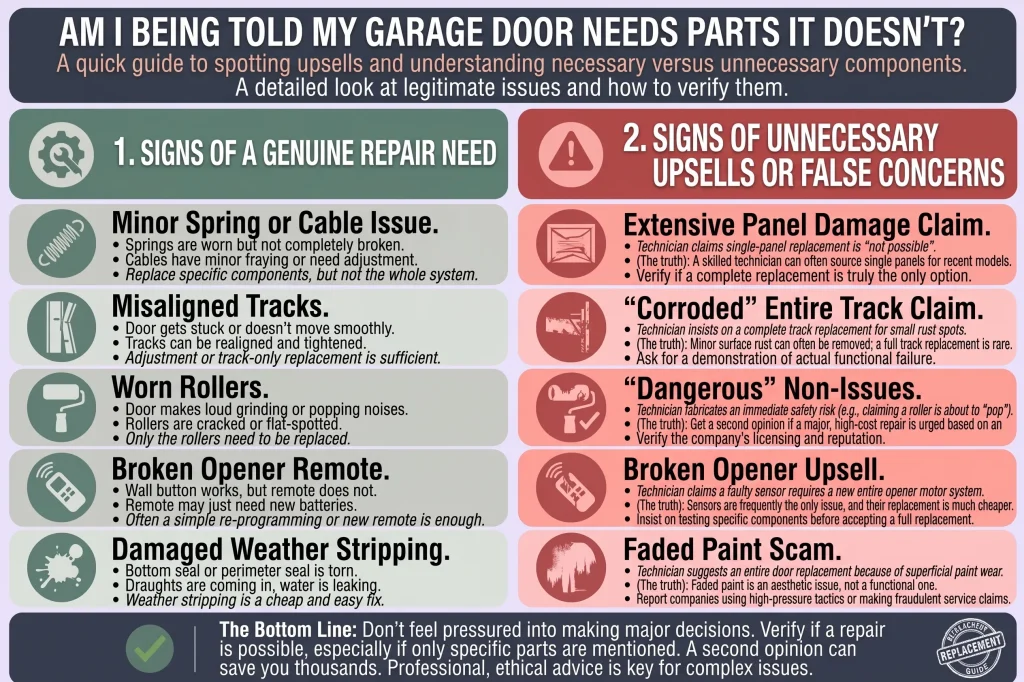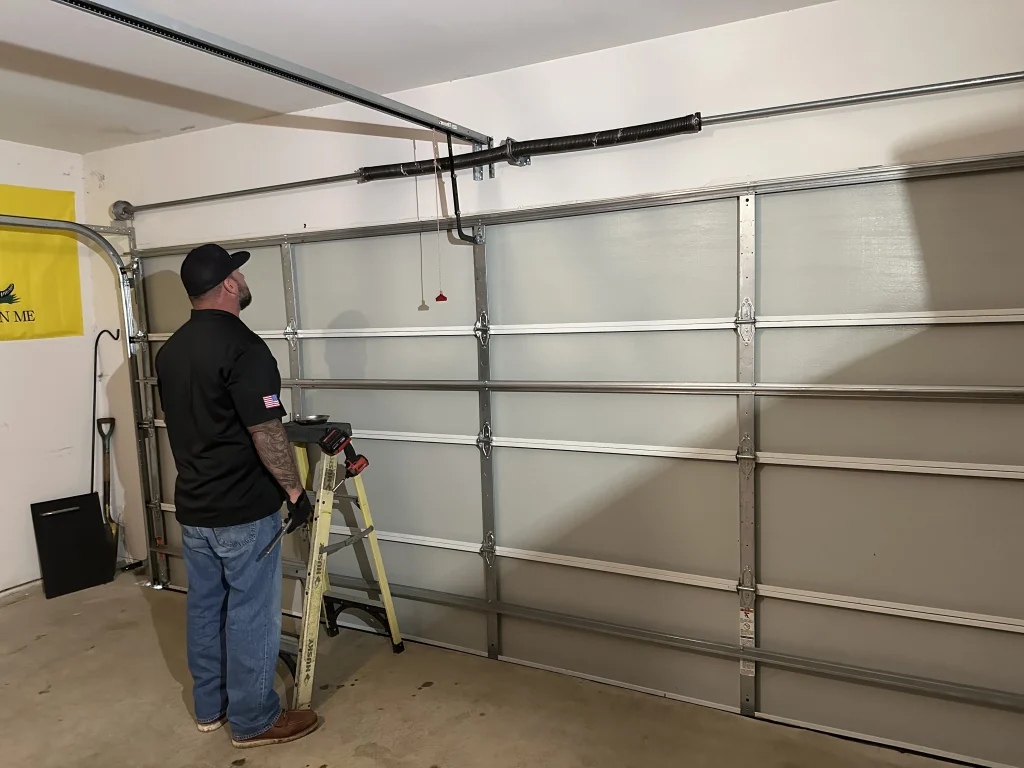
Early panel issues often show up as small changes in door sound, sealing, or alignment rather than a complete failure. For many residential garage doors, homeowners who notice these changes early can avoid the stress of a door that suddenly binds, reverses, or fails to close securely.
Scheduling garage door panel repair as early symptoms appear can help protect the hinges, rollers, and lift components from additional strain. Panel problems can begin with surface dents, seam stress, or hardware points that start pulling out of position. Clear warning signs help homeowners decide when professional service is the safest next step.
Subtle Panel Clues That Often Show Up Before Bigger Damage
Panel problems often start small, and many signs are visible during normal daily use. A dent can change stiffness, a seam can start separating, and fastener points can loosen without creating an obvious functional failure right away. Early identification matters because small changes in geometry can affect how sections pivot and how rollers ride in the track.
Common early clues include:
- A new dent or crease that appears deeper than normal scuffing
- Hairline cracking near hinges, handles, or bracket areas
- Slight bowing or waviness along a panel face
- Seams that look uneven or begin showing a thin gap
- Paint flaking, bubbling, or rust spots on steel surfaces
- Bottom edge swelling or softening on wood sections
Even when the door still opens and closes, these clues can indicate weakening structure or increasing stress at load points. A professional can confirm whether the issue is cosmetic or whether it affects safe travel.
For panel damage causes and how they build over time, visit our blog, “What Typically Causes Garage Door Panel Damage Over Time?“
How Alignment, Sealing, and Noise Changes Reveal Panel Trouble
Many panel problems are revealed by how the door moves and seals. A section that warps slightly can change hinge angles and create rubbing points. A dent near a seam can also affect how sections meet, creating air gaps and rattling under movement.
Warning signs related to movement and sealing include:
- The door sounds louder or develops a new rattle during travel
- The opener pauses or reverses at the same point repeatedly
- The door looks slightly out of square when closed
- Weatherstripping no longer sits evenly along the sides
- Light shows through the section joints or along the bottom edge
- One side appears to drag or rub more than the other
Homeowners often compare repair versus replacement once sealing and alignment start changing. A professional can explain when garage door panel replacement is appropriate and when early service can stabilize the door without a section swap.
For a complete system overview and timing guidance, check our article, “How Do Garage Door Panels Work and When to Replace?”
Panel Damage Near Hardware Points That Should Not Be Ignored
Some panel issues are more concerning because they involve load-bearing points. Hinges, roller brackets, and struts carry force during every cycle. Damage near those points can spread faster and may cause uneven travel, especially if the door is used multiple times per day.
Higher-risk panel symptoms include:
- Cracks that run outward from hinge screws or bracket fasteners
- Fasteners that appear loose, elongated, or pulled through material
- A hinge that looks tilted or sits unevenly against the panel
- A roller bracket area that shows bending or distortion
- A strut that no longer sits flush or appears shifted
A technician can inspect whether stress is localized or whether related hardware wear is contributing. In some cases, opener force behavior becomes part of the evaluation, including settings and travel behavior on garage door openers.
For cases where replacement may not be necessary, visit our blog post, “Is Full Garage Door Panel Replacement Always Necessary?”
What Professional Inspection Looks for Beyond the Panel Surface
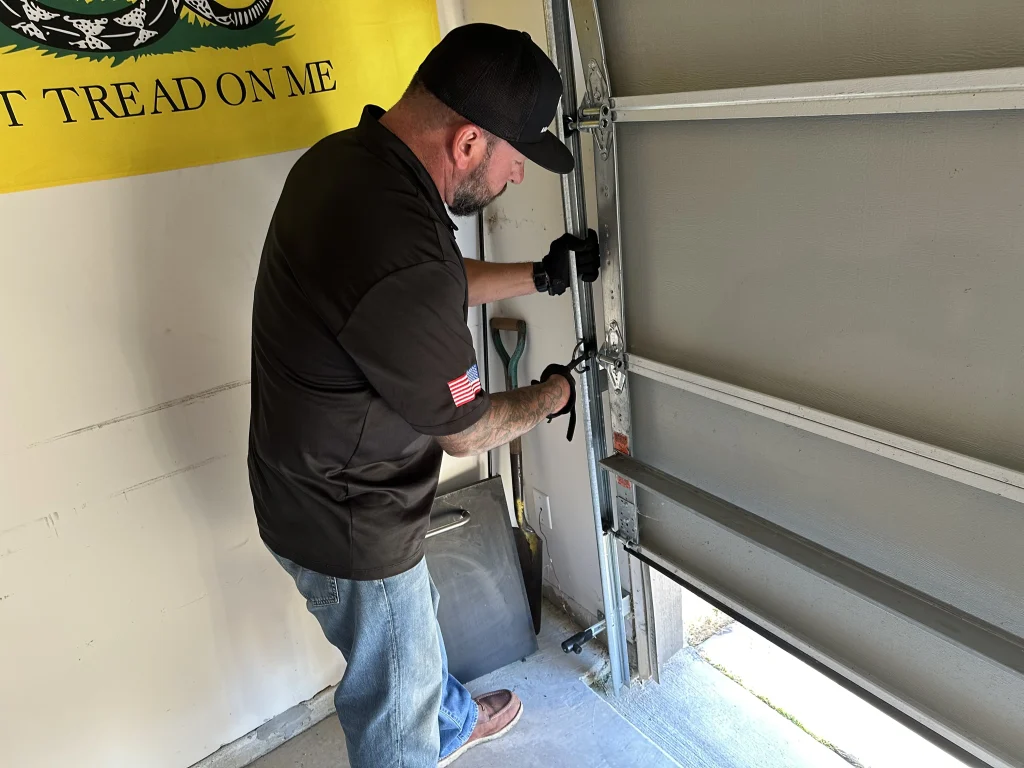
Surface damage is only part of the story. A professional inspection checks how panel condition affects door alignment, hardware wear, and lift balance. The goal is to identify the underlying driver so the problem does not keep returning.
Travel path and track interaction
Technicians watch the door through a full cycle to identify rubbing, binding, and out-of-square movement. Roller seating and track spacing help confirm whether the travel path is stable.
Panel integrity and reinforcement support
Creases, seam separation, and fastener hold strength are checked, along with reinforcement struts. Panels that flex under load can increase hardware strain.
Hardware condition and surrounding wear
Hinges, roller brackets, and attachment points are inspected for movement and elongation. Wear patterns often explain why damage appeared where it did.
Lift balance and related system strain.
Panel problems can develop alongside balance changes. A technician checks springs, cables, and drums, and may recommend replacing a torsion spring if balance support is compromised.
A complete inspection helps homeowners avoid partial fixes and supports a stable, long-term outcome. Guidance from This Old House explains the concept of spring cycles, where one open-and-close counts as a single cycle, and notes how typical cycle life helps homeowners plan spring replacement based on usage.
When Repairs Are Enough Versus When Replacement Becomes Practical
Not every early sign requires replacement. Many doors can be stabilized when damage is limited and matching materials remain serviceable. A professional can explain the likely path based on the location of damage, section availability, and the condition of surrounding hardware.
Repair-friendly situations
Minor dents away from hinge points, early finish wear, and minor seam changes may be addressed through professional repair planning when the structure remains sound.
Replacement-leaning situations
Cracks at load points, warping that changes travel, and widespread deterioration can lean toward replacement planning. Some homeowners opt for residential garage door replacement panels when a matching section is available, while others consider broader garage door replacements when matching is limited.
Questions about garage door panel replacement costs often arise during planning, but recommendations depend on the door model, material, insulation design, and whether matching sections can be sourced.
Early Panel Signs and the Typical Service Direction
A chart can help homeowners connect early signs with what professionals typically evaluate and recommend. Final recommendations depend on the door model, damage location, and the condition of the surrounding hardware.
| Early Sign | What It Often Suggests | Why It Matters | Typical Professional Next Step |
| Light dent on a flat area | Cosmetic change | May remain stable if away from load points | Inspect and confirm alignment |
| Hairline crack near a hinge | Stress at a load point | Can spread under daily cycling | Evaluate fastener hold and section integrity |
| Uneven seam gap | Section geometry shift | Sealing and alignment can degrade | Check reinforcement and travel alignment |
| Rust spots or bubbling paint | Finish breakdown | Corrosion risk increases | Assess surface condition and protection needs |
| Bowing across a panel | Structural drift | The binding and opener strain risk rises | Inspect hardware and track interaction |
Using early signs to guide a professional visit helps prevent disruption and supports safer, smoother operation.
Keep Panel Issues From Turning Into Bigger Door Problems
Early panel signs provide valuable timing clues. Dents, seam gaps, cracks near hinges, and new rubbing sounds often indicate a developing issue that can stress hardware and affect sealing. Professional evaluation helps determine whether garage door panel repair is the right path or whether replacement is more practical, based on section availability and structural condition. Addressing early signs supports reliable closure, safer operation, and fewer surprise interruptions.
Alliance Overhead Door supports homeowners in Celina, TX, with inspections and services focused on safe travel, reliable access, and preventive care. Our team evaluates panel integrity, hardware wear, and alignment to recommend a practical next step.
Contact us today or call us to discuss early panel concerns and service options. A professional can recommend the safest course of action based on the symptoms and door condition.
Frequently Asked Questions
What does panel misalignment look like on a garage door?
Panel misalignment often appears as uneven spacing between sections or panels that no longer sit flush when the door is closed. Misalignment may also cause the door to lean or bind while opening.
Can small dents indicate a bigger garage door panel problem?
Yes, small dents can weaken the structural integrity of a panel. Over time, dented panels may flex, crack, or affect the door’s balance and smooth operation.
Do garage door panel problems cause unusual noises?
Yes, panel issues often cause popping, creaking, or grinding sounds during movement. These noises usually result from panels shifting, rubbing, or placing stress on hinges and rollers.
How can weather exposure affect garage door panels over time?
Sun exposure, moisture, and temperature changes can cause panels to warp, fade, or corrode. Early signs include surface rust, discoloration, or slight bending along panel edges.
Can cracked or splitting panels still function normally?
No, cracked or splitting panels usually worsen with continued use. Structural cracks reduce panel strength and can eventually interfere with safe door operation.
Does panel damage affect garage door balance?
Yes, damaged panels can change the weight distribution across the door. An imbalanced weight places extra strain on springs, tracks, and the opener. For additional troubleshooting context, guidance from Family Handyman outlines common opener problems and checks that often relate to balance and uneven door movement.
Are gaps between garage door panels a warning sign?
Yes, widening gaps between panels often signal shifting or weakened connections. These gaps can lead to air leaks, moisture intrusion, and increased mechanical stress.
How does panel damage impact garage door safety?
Panel damage can cause unpredictable movement or sudden failure under load. Compromised panels increase the risk of the door coming off track or failing during operation.
When should a professional inspect garage door panels?
We recommend a professional inspection as soon as visible panel damage appears or when the garage door starts moving unevenly or inconsistently. At Alliance Overhead Door, we inspect panel alignment and structural condition early to prevent minor issues from turning into larger, more costly problems.